If your garage door won’t open, feels insanely heavy, or scares the life out of you with a sudden bang, a broken garage door spring is usually the root of the problem.
It feels serious (and it can be), but it’s also a very common repair our technicians see every day.
This article will walk you through the most common garage door broken spring symptoms, what you can check yourself, and when a professional is the safer call.
Most Common Garage Door Spring Symptoms
- The garage door won’t open at all.
- The door only lifts or closes a few inches, then stops or reverses.
- The door suddenly feels extremely heavy when lifted by hand.
- A loud bang or snap came from the garage.
- The door opens crookedly or unevenly, with one side higher than the other.
- Cables along the tracks look loose, frayed, or hanging.
- The opener runs, hums, or strains, but the door doesn’t move.
You might notice spring problems instantly, or they may show up as a gradual change that finally crosses a line one day when the garage door won’t open or close.
Each of the symptoms above might look a little different on the surface, but they usually all mean the spring isn’t carrying the door’s weight anymore.
Immediate Safety Steps If You Suspect a Broken Spring
If your garage door spring looks or sounds broken, stop using the door right away and keep your distance from anything that moves.
- Don’t run the opener again
- Don’t try to lift a heavy or crooked door
- Keep kids, pets, and cars out of the opening
- Stay away from the springs, brackets, and cables
- Unplug or shut off the opener
A door with a broken spring is unpredictable and heavy. Safety matters more than getting out a few minutes faster.
What the Garage Door Problem Is (And What to Do Next)
Different door behaviors point to different levels of urgency when a spring fails. This table helps you quickly understand what’s happening and what your next step should be.
| Garage Door Symptom | Real Problem | What To Do |
| Door won’t open at all | Spring has snapped completely | Stop using the door and call for repair |
| Door lifts a few inches, then stops | Severe spring tension loss | Stop and schedule service |
| Door feels extremely heavy by hand | Spring no longer carrying door weight | Do not force — professional repair |
| Door opens crooked or uneven | Spring failure affecting cables | Stop use to prevent track damage |
| Loud bang came from the garage | Sudden spring break | Inspect visually, then call a pro |
| Opener strains, hums, or reverses | Opener compensating for spring failure | Stop before opener is damaged |
These symptoms look different, but they usually point to the same root problem: The door is no longer balanced.
Continuing to use it shifts stress onto cables, tracks, and the opener, which leads to higher repair costs.
Why Garage Door Springs Break
Garage door springs typically break because of everyday use, corrosion, moisture in the air, temperature swings, or being mismatched to the door’s weight.
Springs Wear Out by Cycles, Not Years
Garage door springs are rated by cycles (one open and close), not calendar years.
A standard torsion spring is designed for roughly 10,000 cycles, which works out to between 7 and 10 years for an average household that uses the garage door regularly.
Most households open and close the garage door multiple times a day. That frequent use can push springs to their cycle limit sooner than you might expect.
Garage Doors Are Heavier Than Most People Think
A residential garage door can weigh between 150 and 400 pounds. The spring system is what makes that weight manageable.
When the spring weakens or snaps, you’ll immediately feel that full load.
Rust, Moisture, and Temperature Swings
Homes in our area of the Southeast deal with humidity, moisture, and seasonal temperature changes. Over time, that exposure accelerates rust and metal fatigue, which affects the lifespan of your door’s springs.
Incorrect Spring Size or Installation
If the spring isn’t properly matched to the door’s weight or was installed incorrectly, it will wear out faster and fail more suddenly.
This is why the installation of any major home system (garage doors, plumbing, heating and A/C equipment, appliances, etc.) should be handled by trained professionals.
When sizing or setup is wrong, early failure is more likely.
A professional makes sure the system works safely and lasts, so you don’t have to deal with one that keeps costing you time, stress, and money.
Quick DIY Checks Homeowners Can Do Safely
Homeowners can safely check for visible spring gaps, hanging cables, and abnormal door weight without touching any high-tension components.
These checks won’t fix the problem, but they can help confirm what’s going on.
Look for a Visible Spring Gap
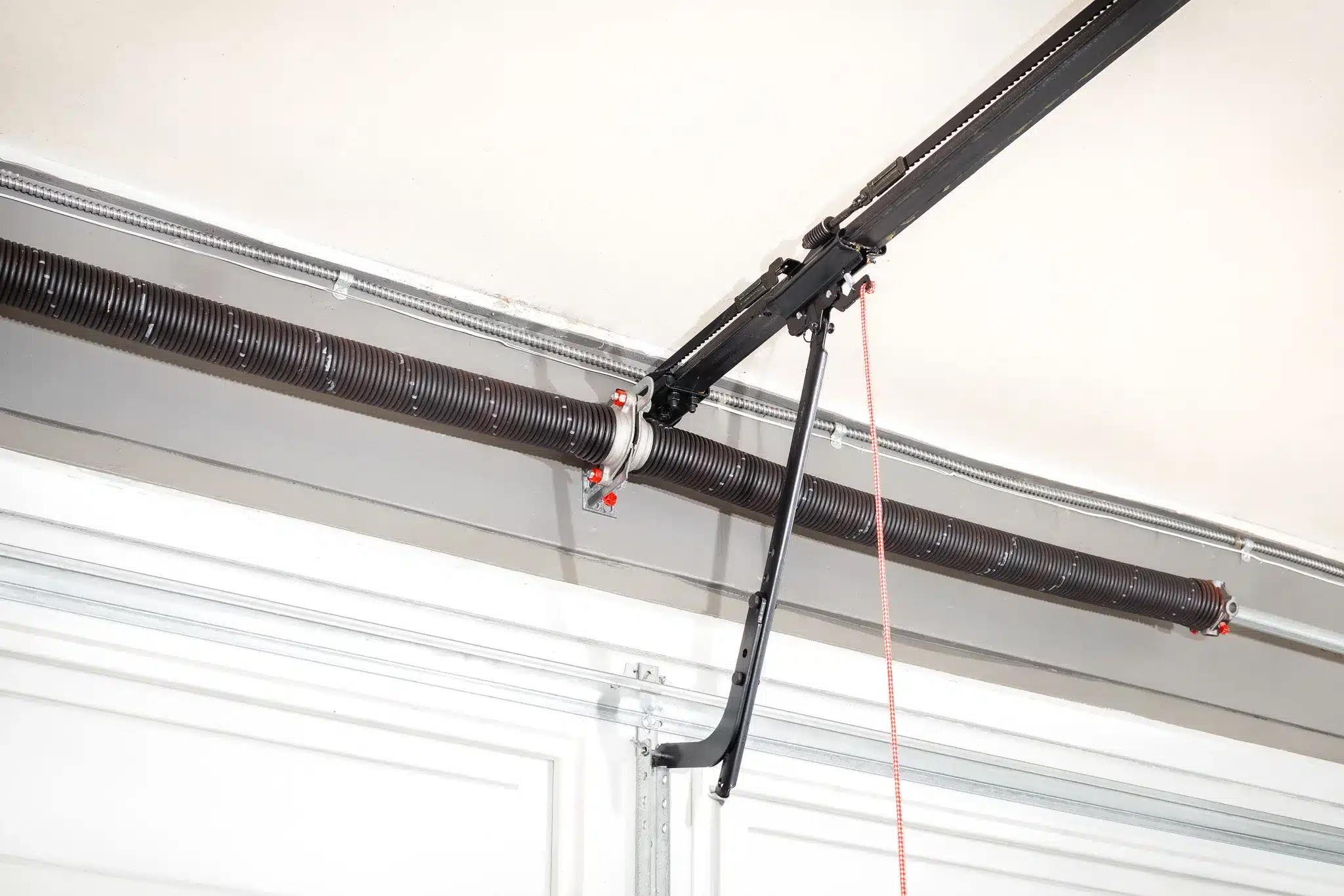
Stand inside the garage and look above the door opening. If you see a long metal spring mounted horizontally with a clear break or gap in the middle, that’s a clear sign the spring is broken.
Check for Loose or Hanging Cables
Look along the sides of the door near the tracks. If a cable is dangling, looks slack, or isn’t wrapped tightly around the metal drum at the top, stop using the door.
Loose cables can cause the door to tilt or drop unexpectedly.
Test the Door’s Weight Carefully
Only do this if the door is fully closed. Using both hands, try lifting the door just a few inches off the ground. If it feels extremely heavy or won’t budge, lower it immediately and stop.
A properly working spring normally carries most of the door’s weight.
Use the Emergency Release Only if the Door Is Fully Down
The emergency release is usually a red cord hanging from the garage door opener rail. Pulling it disconnects the door from the opener.
Only do this when the door is completely closed and not stuck halfway open, so the door doesn’t drop suddenly.
Secure the Area if the Door Is Stuck
If the door is partway open or crooked, keep people, pets, and cars away from the opening.
Don’t try to prop it up or push it down. Leave it alone until a professional can secure it safely.
Torsion Springs vs. Extension Springs: Know What You Have
Most garage doors rely on one of two spring types, and knowing which one you have helps explain what went wrong.
Torsion springs are mounted above the garage door opening. When one breaks, it usually makes a loud bang, and the door suddenly feels impossibly heavy or won’t lift at all.
Extension springs run along the sides of the door near the tracks. When they fail, the door often opens unevenly, looks crooked, or feels jumpy as it moves.
Different springs require different tools, parts, and safety steps. So identifying which system you have is helpful, but replacement should always be handled by a professional.
Is It Safe to Operate a Garage Door With a Broken Spring?
Using a garage door with a broken spring is dangerous because the springs store and release large amounts of force that can hurt you.
Even with modern safety features, garage door accidents still cause around 35,000 injuries every year, some severe and some fatal.
Many of those happen when people try to keep using the door or fix spring problems themselves.
This is why garage door spring replacement is never DIY-safe.
The risk isn’t just the spring. It’s the uncontrolled weight and movement of the door itself.
What Repair Data Reveals About Broken Garage Door Springs
Broken springs aren’t rare. In fact, they’re one of the most common garage door problems our technicians see.
Based on internal service data, roughly 60% of our garage door service calls are tied to spring issues.
What the data consistently shows is this pattern:
- Spring failure is usually the first problem
- Continued use after failure is what causes the expensive problems
- Openers, cables, and tracks are most often damaged after the spring stops doing its job
In other words, the spring itself is rarely the only issue by the time homeowners call us. It’s everything that was forced to compensate once the door lost balance.
One of our senior garage door technicians explains it this way:
“Usually, the spring breaks, and that’s still a manageable fix. The damage comes after, when the door keeps getting run. That’s when we see fried openers, twisted tracks, and cable issues. The longer it runs like that, the bigger the repair gets.”
So, the earlier the issue is addressed, the simpler, safer, and more affordable the fix tends to be.
When to Call a Professional for Garage Door Spring Repair
Call a professional if:
- The door won’t open or suddenly slams shut
- You see a visible gap in the spring
- Cables are loose, frayed, or hanging
- The door is off-track or opening unevenly
- The opener strains, stops mid-lift, or reverses
Trying to “work around” these issues rarely ends well. Hoping it sorts itself out usually just means more parts fail along the way.
Professional Garage Door Repair for Heavy or Stuck Doors
The safest way to fix a broken garage door spring is professional repair by trained technicians.
We help homeowners across the Southeast handle garage door issues safely, quickly, and correctly.
With licensed and insured technicians, eight decades of experience, and a 4.8-star rating from more than 14,000 reviews, you’re not rolling the dice on a quick fix.
If your garage door is heavy, stuck, or behaving strangely, it’s time to stop forcing it and get professional help. Contact our team today!
Prevention and Maintenance Tips to Extend Spring Life
- Schedule annual professional inspections
- Lubricate springs, rollers, and hinges a few times a year
- Keep the door properly balanced
- Avoid adding weight without upgrading springs
- Pay attention to changes in noise or movement
Garage door springs will eventually wear out, but how well the door is maintained and balanced plays a big role in how long they last and how they fail.
Adding these habits to your annual maintenance checklist will help you spot small problems early and keep the entire system running smoother, quieter, and longer.
Garage Door Spring FAQs
How do I know if my garage door spring is broken?
If the door feels extremely heavy, won’t open fully, opens unevenly, or you hear a loud bang, a broken spring is likely.
Can I open my garage door with a broken spring?
We don’t recommend it. Forcing the door can cause injury or damage the opener, cables, and tracks.
How long does a garage door spring last?
Most springs last about 7 to 10 years, depending on daily use, door weight, and environmental conditions.
Is it safe to replace garage door springs?
No. Spring replacement involves high tension and heavy components and should only be repaired or replaced by trained professionals.