Wondering whether you really need an electrical panel upgrade, or if those flickering lights and tripping breakers are “normal”? Many Southeast homes still rely on panels installed decades ago, so it’s a fair question.
This guide breaks down what to look for, how to self-check, and what happens during a professional upgrade.
Signs You May Need an Electrical Panel Upgrade
The clearest signs your electrical panel needs an upgrade often show up as everyday annoyances, including:
- Breakers tripping
- Lights dimming
- Outlets overheating
- The panel is struggling to power modern appliances
Electrical panels have limits; they age, and they were never designed for today’s energy demands, such as A/C units, EV chargers, gaming systems, and smart technology.
Many older homes in the Southeast fall into this category. In fact, 39% of homes built before 1960 have main breakers rated at 100 amps or less.
That worked fine decades ago, but today’s electrical load can easily overwhelm that capacity. These are the red flags to watch for:
Frequent Breaker Trips or Blown Fuses
When a breaker keeps tripping, it’s protecting your home from overheated wires. Repeated trips usually mean your panel is overloaded and can’t keep up with daily usage.
Newer homes rarely deal with this: Fewer than 5% of homes built after 2000 still have 100-amp service. That’s why older houses in Tennessee, Alabama, Kentucky, and Georgia tend to trip far more often. They’re simply running out of electrical “room”.
Flickering or Dimming Lights
Lights that dim when the A/C starts or when you run the microwave are a symptom of voltage drop, caused by overloaded branch circuits or a panel struggling to distribute power evenly.
How many times have your lights dimmed this week? If it’s more than once, your panel is waving a yellow flag.
Burning Smells, Buzzing, or Scorch Marks
Any smell of burning plastic, warm metal, or a faint buzzing near the breaker box needs immediate attention. It often means overheating components or loose wiring.
This ties directly into home safety. Electrical problems cause about 51,000 home fires each year, nearly 500 deaths, and $1.3 billion in property damage.
We don’t want you taking that kind of risk, so take quick action when you notice these electrical warning signs.
Outdated Electrical Panel Brands (Federal Pacific, Fuse Panel, Zinsco)
Some older panels are known to fail under overload, meaning they don’t trip when they should. That’s a major fire hazard. Breakers in these panels can fail up to 25% of the time.
If your panel says “FPE” (stands for Federal Pacific Electric), “Federal Pacific,” or “Zinsco,” it’s a fuse box replacement situation, not a wait-and-see situation.
Home Additions, Renovations, or New Appliances
New Heating, Ventilation, or Air Conditioning (HVAC) systems, kitchen remodels, tankless water heaters, or finished basements all pull more power. If your panel wasn’t upgraded during those projects, it may already be maxed out.
Heavy Use of Power Strips or Extensions
If your home looks like a maze of power strips, it’s a sign your panel doesn’t have enough circuits. Over-reliance on extensions increases the risk of overheating and overloaded wiring.
Planning an EV Charger or Other Electrification Upgrades
EV chargers, heat pumps, induction ranges, and solar setups all require more capacity than older electrical panels can cover.
If your panel’s older, you’re in good company: 35-45 million U.S. homes may need service or panel upgrades to support full electrification.
If you’re considering a panel upgrade for an EV charger, that alone is a strong indicator your current setup isn’t enough for the rest of your home, either.
If you recognized even one of the warning signs above, your electrical panel is – at minimum – overdue for electrical maintenance, and it may be time to consider a full upgrade.
How to Check If Your Home Needs an Electrical Panel Upgrade
To check if your home needs an electrical panel upgrade, start by looking at a few obvious indicators:
- Your panel’s amperage rating
- Visible rust or corrosion
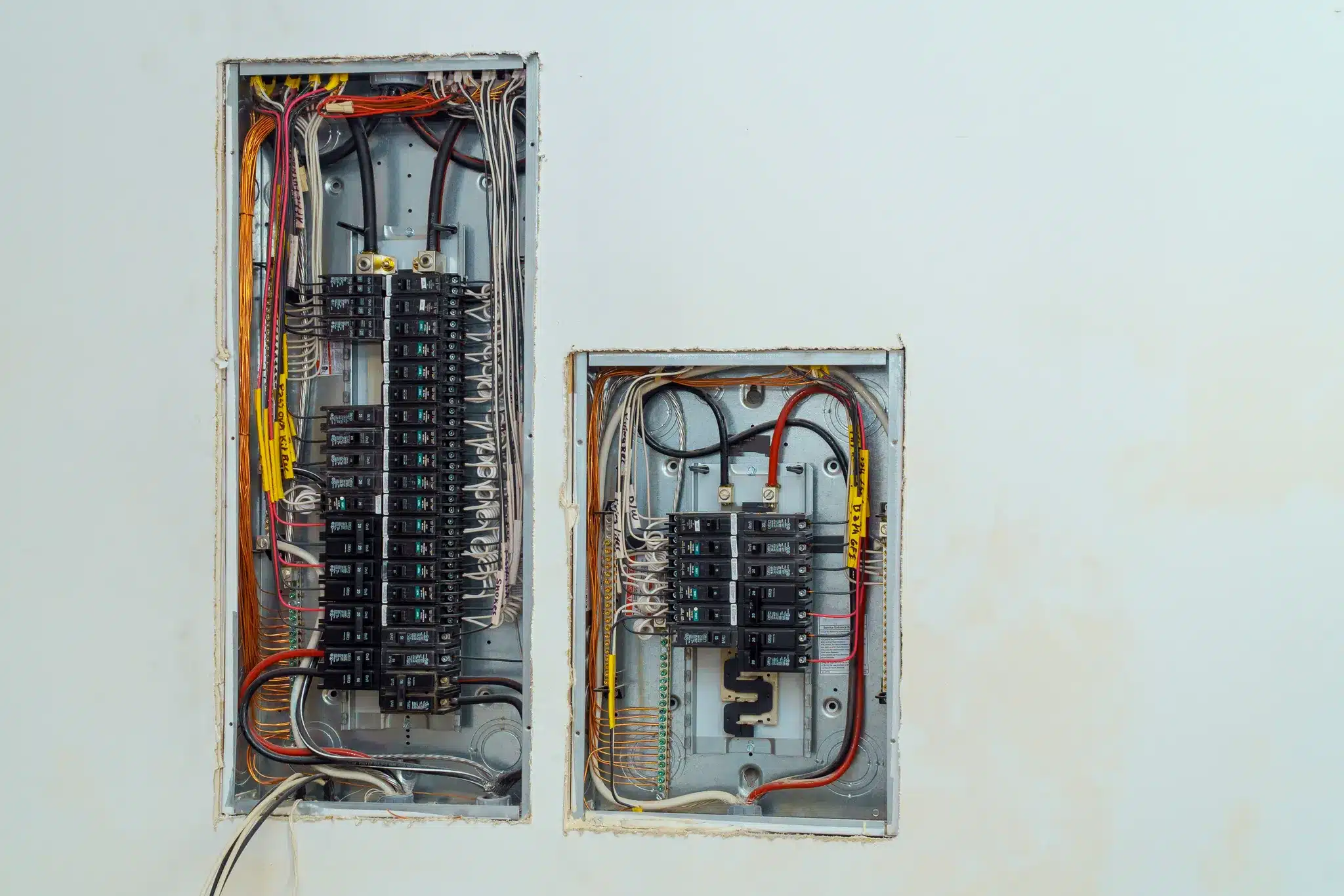
- Overcrowded breakers
- Whether your upcoming electrical needs exceed your current capacity
We’ll break each of these down below so you can safely evaluate your panel without pulling out tools or touching wires.
Check Your Panel’s Amperage Rating
Older homes often run on 60-, 100-, or 150-amp service, while modern homes typically have 200 amps or more. That’s a massive difference in available power.
A lower amperage rating means your panel has a smaller “power budget,” which can lead to signs that you need a new breaker box (tripping breakers, dimming lights, hot outlets, etc.).
Look at the main breaker label. If it reads 60, 100, or even 150 amps, ask yourself: Is this enough for my A/C, appliances, and future upgrades?
For many homeowners, the answer is no.
Look for Rust or Corrosion
Open the panel door (just the door, nothing else) and see if there’s rust, flaking metal, or moisture stains. Corrosion is a major warning sign because it means water is collecting inside.
Moisture and electricity don’t mix. It increases the risks of an outdated electrical panel, from overheating to internal arcing. These problems can compound quietly until they become dangerous.
If your panel is in a damp basement, garage, or on an exterior wall in a humid region like ours, take this sign seriously.
Scan for Double-Tapped or Overcrowded Breakers
A double-tapped breaker means two wires are crammed under one screw when only one belongs there. Overcrowded breakers signal the same issue: Your panel doesn’t have enough room for the circuits your home demands.
This is a common reason to consider upgrading your electrical panel: it shows your system is being stretched beyond what it was built to handle.
Consider Upcoming Electrical Needs
If you’re considering installing an EV charger, upgrading HVAC equipment, adding a hot tub, or building a home office, your panel must be ready to handle the extra load. A panel upgrade for an EV charger alone can double the strain on older electrical systems.
If your lifestyle has outgrown your electrical panel, an upgrade should be on your radar. This quick checklist won’t replace a professional inspection, but it gives you a clear starting point. Hopefully, it reveals any issues worth addressing sooner rather than later.
What Happens During an Electrical Panel Upgrade
An electrical panel upgrade involves removing your old breaker box, installing a new panel that meets current electrical codes, updating grounding and bonding, and ensuring your home can safely support today’s power demands.
Each stage protects your home from the risks of an outdated electrical panel, and we’ll break down exactly what to expect during a home electrical inspection below.
Step 1: Evaluation by a Licensed Electrician
Before any work begins, a licensed electrician inspects your existing panel, wiring, grounding, and breaker conditions. They check for overheating, double-tapped breakers, loose connections, and signs that you need a new breaker box.
They’ll also perform a load calculation to confirm whether your home’s current and anticipated usage even requires a larger panel.
Step 2: Power Shutoff
Your home’s power is turned off temporarily so the electrician can safely disconnect the old panel. The outage usually lasts a few hours, and you’ll be told exactly when it starts and stops. This keeps your technician and your home safe during the replacement process.
Step 3: Removing the Old Panel & Installing the New One
Once the power is off, the old panel is removed, and the new one is mounted, grounded, and bonded correctly. Breakers are organized, circuits are labeled, and safety updates are brought up to modern code.
This is where outdated wiring issues are corrected and where homeowners upgrading for a hot tub, home office, or panel upgrade for an EV charger finally get the capacity they need.
Step 4: Utility Company Coordination
If the service entry cable or meter needs adjustment, the utility company steps in to reconnect the upgraded system.
This is common with major capacity increases, especially when moving from older 100-amp service to modern 200-amp service.
Step 5: Final Inspections
A local building inspector reviews the new installation to ensure it’s compliant and safe. Once approved, your home is officially cleared to power up with its upgraded electrical system.
How Long Does It Take to Replace a Breaker Box?
A typical electrical panel upgrade takes about half a day to a full day, depending on the condition of your old system. When everything’s done, you end up with a safer, stronger electrical foundation that can support your home today and for decades to come.
Benefits of Upgrading Your Electrical Panel
Upgrading your electrical panel comes with real, day-to-day benefits like better safety, steadier power, and a home that can actually keep up with your lifestyle.
If you’re trying to decide whether a panel upgrade is worth it, here’s what homeowners gain the moment the work is done.
Improved Safety & Reduced Fire Risk
A new panel dramatically lowers the chances of overheating, arcing, and breaker failures (problems that older panels are much more vulnerable to).
Electrical wiring equipment is involved in 4% of home fires and 6% of all home fire deaths, which is why replacing outdated equipment is such an important safety step.
If you’ve noticed scorch marks, buzzing, or warm breakers, those issues won’t fix themselves.
Support for Modern Appliances & Technology
A modern panel can handle the heavy hitters like:
- EV chargers
- Heat pumps
- Induction ranges
- Home office equipment
- Hot tubs
If your lifestyle includes (or will soon include) any of these, an electrical panel upgrade can prevent breaker trips and inconsistent power.
For many homeowners, it’s the only way to avoid the constant fight between appliances.
Higher Home Resale Value & Easier Home Sale
Buyers today expect a 200-amp panel. If yours is outdated, it can lower your home’s value or raise objections. Investing in a new panel is a fantastic way to entice buyers and speed up the sale.
Better Insurance Eligibility
Some insurance carriers won’t insure homes with recalled or unsafe panels (including those FPE, Fuse Panel, and Zinsco units we mentioned above).
Upgrading removes these outdated electrical panel risks and may help you secure better coverage or avoid policy issues when you need coverage.
If you want a safer home, fewer electrical headaches, and the freedom to power anything your life requires, upgrading your panel is one of the smartest investments you can make!
Hire a Trusted Electrician for Your Electrical Panel Upgrade
If your home has flickering lights, breakers that trip for no apparent reason, an Eisenhower-era panel, a faint burning smell, or big plans for an EV charger or new appliances … your electrical system needs an upgrade.
A new electrical panel is an investment in safety, reliability, and a home that finally keeps up with the way you live.
Since 1944, we’ve helped homeowners across Tennessee, Alabama, Kentucky, and Georgia replace outdated panels, eliminate fuse box hazards, add capacity for modern technology, and restore peace of mind.
When you hire our professional electricians, you get:
- Licensed and insured technicians who specialize in panel upgrades and whole-home electrical diagnostics
- Fuse box replacement, wiring repair, and installation support for EV chargers and new appliances
- 4.8-star quality backed by more than 14,000 reviews
- Financing options available for qualified homeowners
Our Lee Company+ members also get ahead of electrical panel problems with annual electrical inspections that catch corrosion, overloaded circuits, and outdated breakers long before they lead to costly repairs or safety risks.
Schedule your electrical panel inspection with us today and give your home the safe, modern electrical foundation it deserves.
Frequently Asked Questions About Electrical Panel Upgrades
Do I really need an electrical panel upgrade?
If you’re seeing frequent breaker trips, dimming lights, burning smells, outdated panel brands, or planning new appliances/EV chargers, then yes, an upgrade is often necessary.
How can I tell what size electrical panel I have?
Look at the number printed on your main breaker (usually 60, 100, 150, or 200 amps). If yours is 100 amps or below, it may be undersized for modern usage, especially in homes adding heat pumps or EV chargers.
Is a simple electrical panel repair enough?
Repairs help when the issue is a single faulty breaker, rust, or a loose connection. If the entire electrical panel is outdated, overcrowded, or from a recalled brand like Federal Pacific or Zinsco, replacement is the safer long-term fix.
How long does a panel upgrade take?
Most installations take half a day to a full day. Your home’s power is temporarily shut off while the old panel is removed, the new one is installed, and grounding/bonding is brought up to code.
Does upgrading my electrical panel increase home value?
Yes. Buyers prefer homes with modern 200-amp panels because they support EV chargers, HVAC upgrades, and today’s energy-heavy appliances.
Who should I hire for an electrical panel upgrade?
Always choose a licensed, insured electrician trained in whole-home diagnostics. Our team can help you determine whether your home truly needs a full panel replacement or a different electrical fix. Schedule an electrician here.