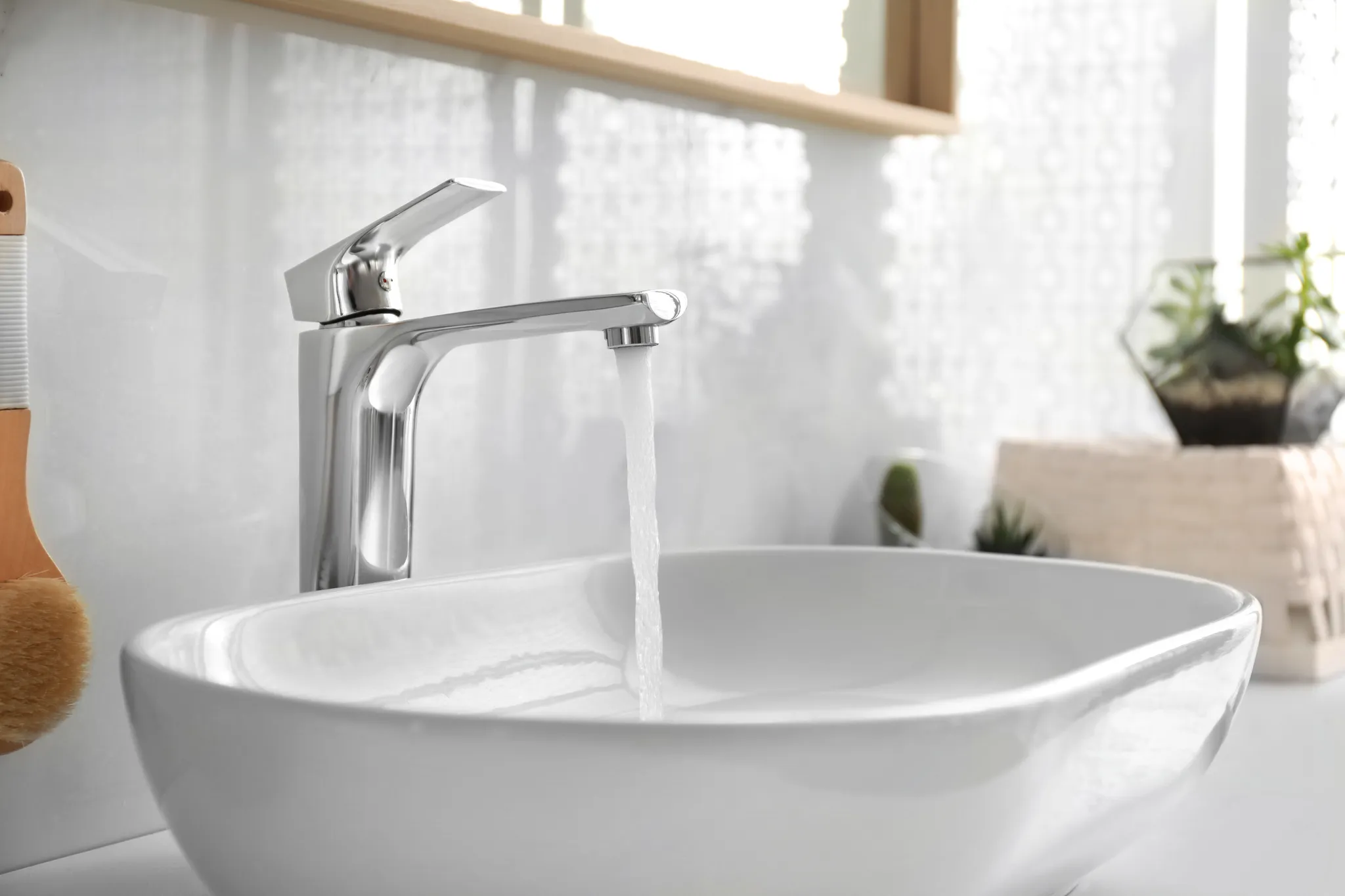
Low water pressure from a bathroom sink almost always comes down to a blockage near the faucet or a pressure problem further back in the plumbing.
Check whether the weak flow is happening at just this one sink or across the whole house. Low pressure from a single sink usually means there’s a local blockage, likely something you can clear yourself. Water pressure problems throughout the house may indicate an issue with the main water supply.
Here’s how to increase water pressure in a bathroom sink, including simple fixes you can do today and situations that call for a professional plumber.
Clean the Faucet Aerator (The Most Common Fix)
A clogged aerator is the reason behind most weak bathroom faucet streams, and cleaning it usually restores full flow in minutes. The aerator is the small mesh screen threaded onto the faucet’s tip. Over time, mineral scale, calcium deposits, and sediment from the municipal water supply collect in that screen and choke off flow.
Looking at our own residential plumbing service data, cleaning debris from the aerator resolves about 37% of the bathroom sink water pressure issues we see, more than any other single repair.
Bathroom faucets account for roughly 40% of all low-water-pressure problems we handle across the home, more than kitchens, whole-home pressure issues, or exterior spigots individually.
How to Clean a Bathroom Sink Aerator
- Unscrew the aerator by hand or with pliers wrapped in a cloth to avoid scratching the finish.
- Soak it in white vinegar for about 20 minutes to break down the mineral buildup.
- Scrub the mesh gently with an old toothbrush.
- Rinse and reattach the aerator.
One of our plumbers shared this tip:
“If you turn the water on and the stream sprays sideways or looks uneven instead of just weak, that’s usually the aerator. If it’s just a weak stream all around, you’re probably looking at a problem down the line.”
Cleaning the aerator every three to six months keeps mineral buildup from becoming a problem in the first place, especially in homes with harder water.
A Lee Company+ membership is a good way to keep this kind of small maintenance on a regular schedule, along with the rest of your plumbing.
Fully Open the Under-Sink Shutoff Valves
Partially closed shutoff valves under the sink are an often-overlooked cause of low water pressure at a bathroom faucet. These valves control the hot and cold supply lines feeding the faucet. They’re often bumped, adjusted, or left partway closed after a repair, a renovation, or even when storing cleaning and bathroom supplies under the cabinet.
Check both handles under the basin and turn them fully counterclockwise. This opens the valve completely and gives water the maximum path to travel through.
Stop and don’t force a valve if:
- It won’t turn with light hand pressure.
- It feels stiff or grinds partway through the turn.
- There’s any moisture or corrosion around the valve body.
A seized valve can snap or start leaking once it’s forced open. If turning the valves doesn’t help, the problem sits further along the line. Our plumbing team can replace a seized valve without damaging surrounding fixtures, and we’ll make sure it’s installed the first time correctly so you don’t end up with a leak where the old valve was.
Check the Water Supply Lines for Kinks or Damage
Water supply lines that are kinked, twisted, or internally degraded are one of the less obvious reasons a bathroom faucet loses pressure. As part of basic bathroom sink plumbing troubleshooting, start by checking the flexible braided lines running from the shutoff valves to the faucet under the sink.
A tight twist or a sharp bend can restrict flow even when everything else checks out.
Signs of a Damaged Water Supply Line
- A visible kink, twist, or sharp bend in the braided line.
- A line that feels flattened or pinched.
- A line older than 8 to 10 years, even if it looks fine on the outside.
Older rubber supply lines can degrade from the inside without showing any external damage. As the rubber breaks down, small flaps of material can form inside the line and act like a one-way valve, cutting flow down to a trickle even though the hose looks fine at a glance.
If your fixtures are original to a home built decades ago, a worn supply line is one of the more common plumbing issues in older homes.
Replacing a supply line is quick and inexpensive, and our plumbers carry the right size and fitting on the truck, so it’s usually done in a single visit.
Replacing a supply line is quick and inexpensive, and our plumbers carry the right size and fitting on the truck, so it’s usually done in a single visit. Together, worn supply lines and shutoff valves account for about 10% of bathroom sink pressure issues that we handle, which is why we check both while we’re already under the sink.
Repair or Replace a Worn Faucet Cartridge
A worn or clogged faucet cartridge is one of the more common causes of low water pressure in a bathroom faucet after the aerator and supply lines have already been checked. Debris that makes it past the supply lines can travel straight into the cartridge or ceramic disc assembly inside the faucet body, where it lodges and restricts flow at the source.
Repairing the cartridge means removing it and flushing out any trapped debris, which can restore flow if the parts underneath are still in good shape. If the rubber seals inside are torn or worn down, flushing won’t fix it; the cartridge needs to be replaced rather than repaired.
Cartridge or stem repairs account for about 20% of the bathroom sink pressure calls we handle. Full faucet replacement follows close behind at around 17%, for cases where the cartridge alone can’t be salvaged.
Identify Your Cartridge Type First
Repair or replacement looks a little different depending on your faucet type:
- Single-handle faucets use one cartridge to control both hot and cold water.
- Double-handle faucets use two separate cartridges or valve stems, one under each handle.
- The cartridge must match your exact faucet model and handle type to seal properly.
One of our licensed plumbers shared this:
“Bring the old cartridge with you to the hardware store, not just the brand name. Parts change every few years, and the wrong one won’t seal right. Matching it saves you a second trip.”
Getting the right part on the first try is the hard part, which is why this is one of the plumbing repairs we recommend leaving to a professional rather than guessing at the model number yourself. This will help you avoid a mismatched seal that leaks inside the cabinet or wall, which is often how a small cartridge problem turns into a much bigger hidden leak down the road.
Fix System-Wide Water Pressure Problems
When more than one fixture in the home loses pressure at the same time, the cause usually sits outside the faucet entirely, in the home’s main water system rather than the sink itself. This is the point where DIY troubleshooting reaches its limit, and a professional plumbing inspection makes sense.
Whole-home pressure issues account for about 30% of the low-water-pressure calls we handle, compared to roughly 40% for bathroom sinks and 20% for kitchens.
In other words, most calls trace back to a single fixture, but a meaningful share turn out to be bigger than they first appear.
Check the Pressure Reducing Valve (PRV)
A failing pressure-reducing valve is one of the most common causes of pressure drops, particularly in high-elevation or far-from-entry rooms in a house. The PRV regulates the pressure of water entering the home from the main line, and when it starts to fail, it can strangle flow unevenly rather than affecting every fixture equally.
Replace Aging Galvanized Pipes
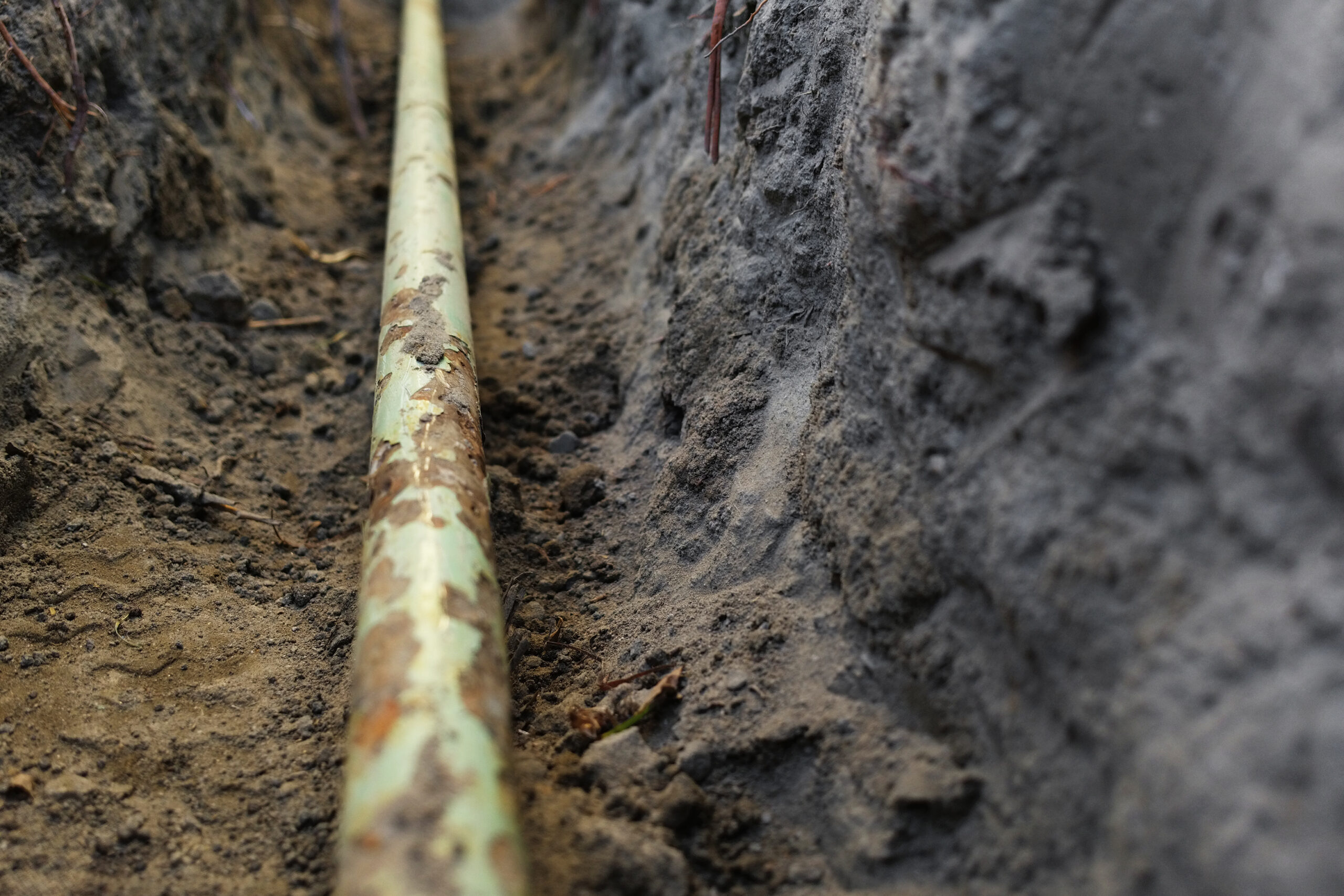
Corroded galvanized pipes are a long-term, whole-house cause of reduced water pressure. Rust scale builds up along the interior walls of these older pipes over decades, gradually narrowing the space water has to travel through, which is why many homeowners don’t notice it until pressure has dropped significantly.
When we look for the cause of low water pressure in a bathroom faucet, pipe material and home age are two of the first things we check, and our own service data show how often each comes up.
We find that most homeowners don’t know their home’s pipe material or exact age until a plumber identifies it on-site, which is reflected in the “unknown” categories below.
Pipe Material in Low Water Pressure Calls
| Pipe Material | Share of Calls |
| Unknown to homeowner before inspection | 47% |
| Copper | 25% |
| Galvanized | 18% |
| PEX | 10% |
Home Age in Low Water Pressure Calls
| Home Age | Share of Calls |
| Pre-1980 | 40% |
| 1980–1999 | 26% |
| 2000–2015 | 15% |
| Unknown to homeowner | 12% |
| 2016+ | 7% |
Copper shows up more often than galvanized in these numbers, but that mostly reflects how common copper piping is in general, not that it causes pressure problems the same way.
Copper typically lasts 50 to 70 years or more and doesn’t corrode from the inside the way galvanized steel does. Galvanized pipe narrows from the inside as it corrodes, which is why it gets specific attention here, even though it’s not the most common material we find.
If your home was built before 1980, or your plumbing is more than 45 years old, it may still have its original galvanized pipes. It could be worth exploring if it’s time for a house repiping before the corrosion causes a bigger failure.
Find and Fix Hidden Plumbing Leaks
A leak in a wall or under a subfloor causes low water pressure by pulling water away from your fixtures before it ever reaches the faucet, so the bathroom sink runs weak even though water is entering the home at normal pressure.
Signs of a hidden leak include:
- A high water bill with no clear explanation
- Damp spots, warped flooring, or a musty smell in one area of the house
- The water meter still moving when every fixture in the house is off
A PRV, a corroded pipe, or a leak like this can all produce the exact same symptom at the sink, which is why we check pressure at multiple points in the home rather than at just the fixture where it showed up. In fact, about 6% of the bathroom sink calls we get turn out to be a whole-home issue like this, found while diagnosing what looked at first like a simple faucet problem.
That’s why a whole-home check is so important, and it’s part of what to expect during a home plumbing inspection. It’s often the fastest way to find which of the three is actually behind the problem.
Call a Professional Plumber for Bigger Pressure Problems
If the aerator, valves, supply lines, and cartridge have all been checked and pressure is still weak, it’s time to bring in a professional plumbing contractor. There’s likely a bigger cause, like a failing PRV, a corroded pipe, or a hidden leak.
We’ve solved plumbing problems for homeowners across the Southeast since 1944. Our licensed plumbers diagnose these issues without damaging delicate, high-end bathroom finishes, and we look at the health of the entire plumbing system rather than just the fixture in front of you.
If a bigger repair is needed, we offer financing for qualified homeowners, so restoring your water pressure doesn’t have to wait on your budget.
Schedule a visit with us today and get your bathroom sink’s water pressure back to where it should be.
FAQ: How to Increase Water Pressure in a Bathroom Sink
Why does only one faucet have low water pressure?
A single faucet with low pressure usually means there is a local blockage rather than a house-wide issue. Check the aerator, the shutoff valves under the sink, and the cartridge before assuming the problem is bigger.
How do I increase water pressure in a bathroom sink?
Start by cleaning the faucet aerator, since mineral buildup there is the most common cause of a weak stream. If that doesn’t help, check the shutoff valves, supply lines, and cartridge next.
Why is my bathroom sink faucet running slow?
A slow-running faucet is typically caused by a clogged aerator, a partly closed shutoff valve, or a worn cartridge. If all three check out fine, the cause is likely further back in the plumbing system.
How do I adjust water pressure in my house?
House-wide pressure is usually adjusted at the pressure-reducing valve (PRV) near the main water line, not at an individual faucet. This is a job for a licensed plumber, since an incorrect adjustment can cause damage to plumbing in other parts of the house.