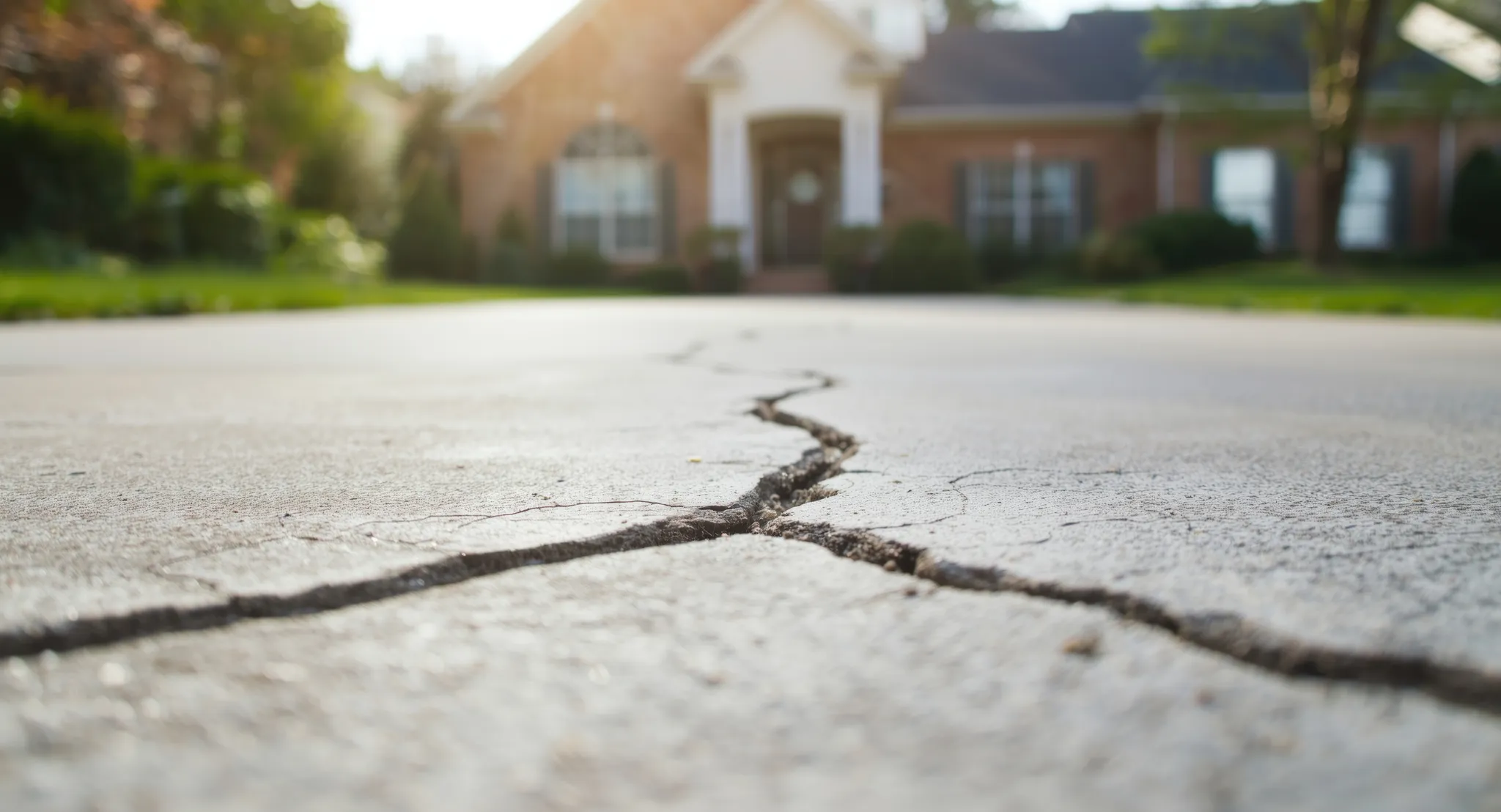
Driveway cracks are caused by soil movement underneath, water infiltration, temperature changes, tree roots, and heavy loads. Small cracks may only need sealing or filling. Sinking slabs, wide gaps, and widespread damage can mean a bigger repair, or even replacement, is needed.
Here’s how to tell what’s causing the cracks and which repair makes sense for your driveway.
Poor Base Preparation
If the base under your driveway wasn’t compacted properly when it was poured, sections can settle unevenly over time. Sunken or uneven areas that show up years after installation are often a sign the base underneath was never fully stable to begin with.
Soil across much of the Southeast tends to be dense with clay, which expands when wet and shrinks as it dries out. That constant swelling and shrinking can speed up uneven settling if the driveway base wasn’t compacted well enough.
Water Erosion
Water that flows along a driveway edge or under a slab can wash soil away and leave pockets of space underneath. The pavement above those spots can eventually sink or crack under its own weight and regular traffic.
If one side of a crack sits noticeably higher than the other, filling the gap won’t fix the movement causing it, since the soil underneath is still missing.
Nashville and other parts of the Southeast see enough rain throughout the year that this kind of erosion tends to show up more often here than in drier climates, especially on driveways where grading or a downspout that isn’t directing water where it should is already sending extra water toward one edge.
Freeze-Thaw Cycles
Water that seeps into a crack expands as it freezes, which can widen the crack further once temperatures drop. Repeated cycles like this, especially over multiple winters, can turn a small crack into a big one.
Tree Roots
Root damage is a common cause of driveway cracks and is usually easy to spot, since the pavement rises in one concentrated area near a mature tree. Repairs get more complicated if you want to keep the tree, because cutting major roots can hurt the tree, and replacing the pavement without addressing the roots underneath just sets the new surface up for the same problem.
Older homes across the Southeast tend to have large, established shade trees, and root growth from those same trees is one of several common issues homeowners run into as a house ages.
Heavy Vehicles
Residential driveways are built around everyday household vehicle use, not much more. Large moving trucks, construction equipment, dumpsters, and other unusually heavy loads are more likely to expose a weak spot that was already there, like a thin section of pavement or an edge that’s already lost support underneath.
Since these causes can look similar on the surface but call for different fixes, our team can inspect the driveway in person and pinpoint which one is actually behind the damage before recommending next steps.
How to Fix a Cracked Concrete Driveway
A narrow crack that hasn’t shifted can usually be filled and sealed. Wider cracks, uneven slabs, or cracks that keep coming back are a bigger problem that might require lifting the slab, replacing a section, or repouring the whole driveway. Before you decide, take a look at how wide the crack is, whether both sides are still level with each other, and how much of the driveway is actually affected.
Small Cracks
For a minor crack with no visible movement between the sides, the goal is usually to keep water and debris from getting deeper into the opening.
A typical repair involves:
- Removing loose concrete, dirt, and weeds from the crack.
- Cleaning the opening thoroughly.
- Applying a concrete crack filler or flexible sealant rated for the width and location of the crack.
- Allowing the repair material to cure according to the manufacturer’s directions.
A patch can slow down further deterioration, but if the crack opens back up quickly, it may need more than a surface-level fix.
Sinking or Uneven Sections
Filler alone won’t fix a crack that comes with a sunken or raised slab. Contractors typically handle this one of a few ways:
- Mudjacking or foam injection: Lifts the sunken slab back into place from underneath.
- Partial replacement: Removes and repours just the damaged section.
- Full repour: Removes and repours a larger area if the damage has spread.
Beyond the crack itself, an uneven slab can catch a tire wrong or become a trip hazard on foot, so this isn’t something to leave sitting for long.
Concrete Driveway Resurfacing vs. Replacement
If the driveway has surface wear, light deterioration, or minor cracking but is still structurally sound, resurfacing adds a fresh layer on top and can save you from a full teardown. Once slabs have shifted, cracks run deep and wide, or the base has given out, resurfacing just hides the problem for a while. A new layer on top of a slab that’s still moving tends to crack again in the same spots.
Getting this call wrong (patching a crack that actually needs lifting, for example) usually just means paying for the same repair twice. If you’re not sure which category your driveway falls into, we’re happy to take a look and point you in the right direction.
How to Prevent Driveway Cracks From Getting Worse
Controlling water and protecting your driveway surface is the best way to prevent cracks. Sealing can help reduce water penetration and make oil easier to clean from the driveway, while proper drainage keeps runoff from repeatedly washing along the pavement edges.
Seal Your Driveway Regularly
Resealing a driveway roughly every 1-3 years, depending on the condition of the surface, is generally what’s recommended. New concrete needs more patience, since it’s best to wait at least six months after a driveway is poured before its first sealing.
Timing is important for sealing, as one of our home improvement team explains:
“It needs to be at least 50° outside before you have your driveway sealed, so this is definitely a spring or summer month project, not something to do in the wintertime.”
We handle driveway sealing as part of our handyman services, along with other exterior maintenance that helps protect a property over time.
Pay Attention to Where Rainwater Goes
Water should move away from the driveway rather than repeatedly collecting along its edges or low spots. Gutters, downspouts, grading, and drainage around the property all affect where stormwater ends up.
Because concrete doesn’t absorb water, rain has nowhere to go but off the surface and onto whatever’s next to it. Switching to permeable pavement can help that water soak in instead of running off somewhere it shouldn’t.
Checking gutters and exterior drainage should be part of your broader seasonal home maintenance, especially before periods of heavy rain.
A brief, heavy rain in the Southeast can send a large volume of water across a driveway all at once, so it’s worth watching closely during a storm to see exactly where that runoff ends up.
When to Call a Professional for Driveway Repairs
Call a concrete professional when your driveway is sinking, slabs have shifted out of alignment, cracks keep coming back after repair, or damage covers a large portion of the surface. Those conditions can point to a problem with the base or soil underneath the driveway, and filling the visible crack may only hide the symptom for a while.
We don’t perform full driveway replacement or major structural concrete repair, but we can help with driveway sealing and other home maintenance projects that protect and improve the exterior of your property.
If the concrete itself needs structural work, a concrete contractor can determine whether lifting, resurfacing, partial replacement, or a new driveway makes the most sense.
Once the structural issues are handled, curb appeal improvements can help the rest of the property catch up to a repaired driveway.
Protect Your Driveway Before Small Cracks Become Big Repairs
Our handyman team takes care of driveway sealing, pressure washing, and other exterior upkeep that helps your property hold up over time. Every estimate is clear and upfront, so there are no surprises once the work starts, and financing is available if a project ends up being more involved.
We’ve earned more than 14,000 positive reviews from homeowners throughout the Southeast, built on that same straightforward approach.
Contact us today to schedule an inspection and find out what your driveway actually needs.
Driveway Crack FAQs
Can you repair a cracked driveway without replacing it?
Yes, many cracked driveways can be repaired without full replacement. Small cracks often just need filling, and driveways that are structurally sound but showing surface wear may be good candidates for resurfacing instead.
When is a driveway crack considered serious?
If the pavement is sinking, one side sits higher than the other, the gap keeps widening, or you’re seeing several large cracks across the slab, then the problem is serious. Have it professionally inspected to determine if a simple repair or sealing will be enough to prevent the crack from getting worse.
Does sealing a driveway fix cracks?
No, sealer protects the surface, but it isn’t a structural repair for existing cracks. Cracks should be filled with a concrete crack filler or sealant, or repaired by a professional if the slab has shifted, before sealing so water has fewer ways to get into the pavement.
How often should a concrete driveway be sealed?
Our current recommendation is to seal a concrete driveway every 1-3 years, based on its condition and exposure. The outdoor temperature should be at least 50° during application and curing, so plan your sealing project during warmer months.
Can poor drainage cause driveway cracks?
Yes. Repeated runoff can erode the soil supporting the driveway or let water pool around already-damaged areas. Keep an eye on where water travels during heavy rain, especially near driveway edges and low spots.