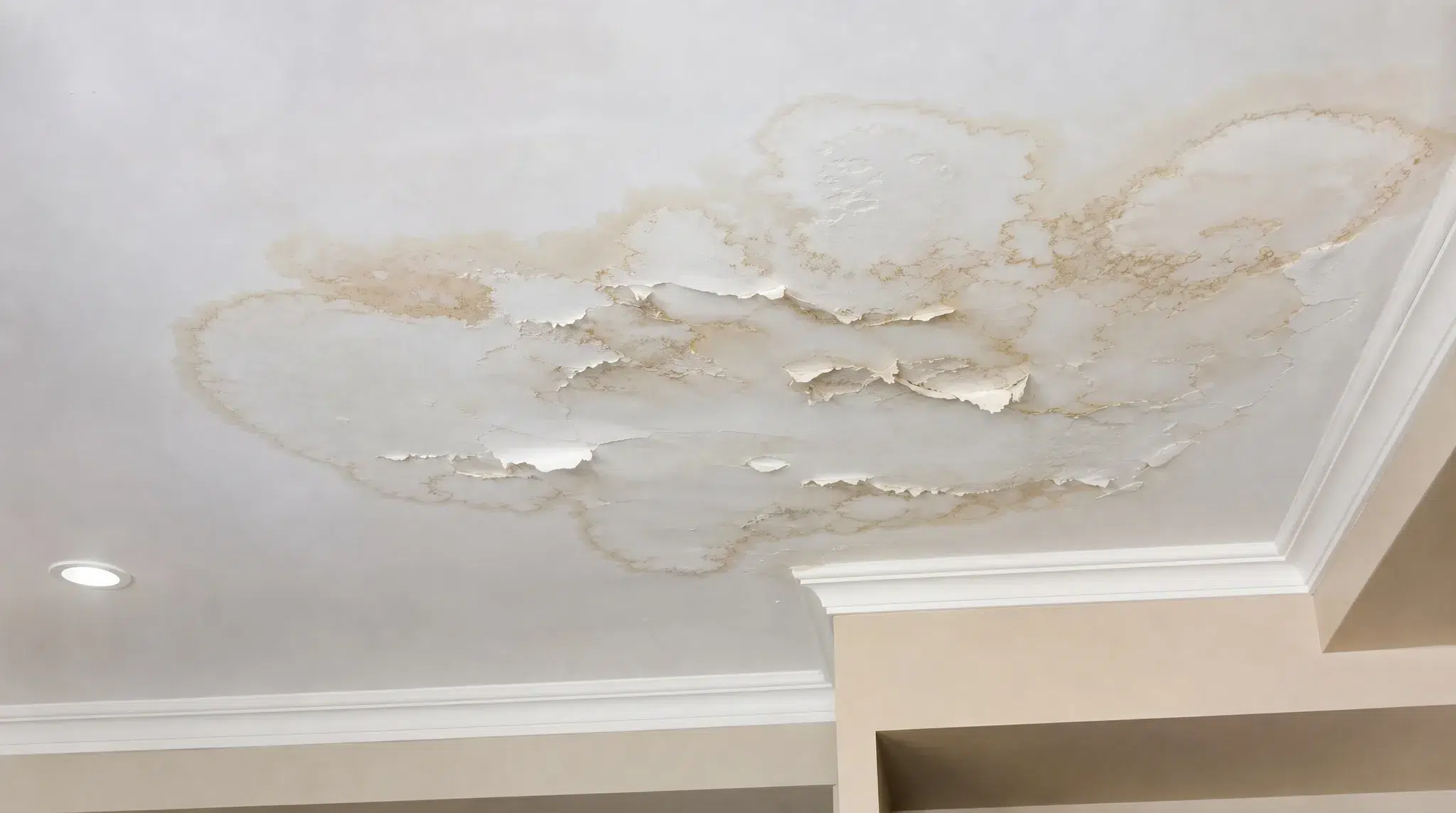
Some of the clearest signs of drywall water damage are stains, bubbling paint, soft spots, and a musty smell. You may notice one of these before you ever see an active leak.
See a strange stain after a heavy storm? Found a soft patch near the bathroom? We’ll help you narrow down where the moisture may be coming from and what to do next.
Look for Discoloration, Water Rings, or Dark Spots
Yellow, brown, or copper-colored stains on drywall can mean water has reached the wall or ceiling. Dark patches can also appear when the drywall underneath the paint has absorbed moisture.
The stain’s location can help identify the source:
- Rings that grow or darken after rain: Water may be getting in through the roof or flashing.
- Stains below an upstairs bathroom: A fixture, drain, or water supply line may be leaking.
- Dark patches near sinks or plumbing fixtures: A nearby pipe or plumbing connection may be the source.
- Ceiling stains below an attic A/C unit: A condensate drain or drain pan problem may be allowing water into the ceiling.
A stain may remain after a leak stops, so its appearance alone won’t tell you whether the problem is still active.
Our team can help track down the source before you start fixing water-damaged drywall. Once we address the moisture problem, we can also repair the damaged wall or ceiling.
Pay Attention to Bubbling, Peeling, or Blistering Paint
Bubbling or peeling paint can mean moisture has worked its way between the paint and drywall. Water can weaken the bond between those layers, causing the surface to blister or flake.
That small bubble on the wall may be the first visible clue, so watch for paint that starts lifting around bathrooms, kitchens, windows, or ceilings.
Don’t just scrape the damaged paint and repaint the area. Finding the source of the moisture first can keep the same damage from coming back.
“When we see bubbling paint, we want to know what’s feeding that moisture. You can make the wall look better, but if there’s still a pipe leaking behind it, you’re going to be right back in the same spot.” – Licensed Plumber at Lee Company
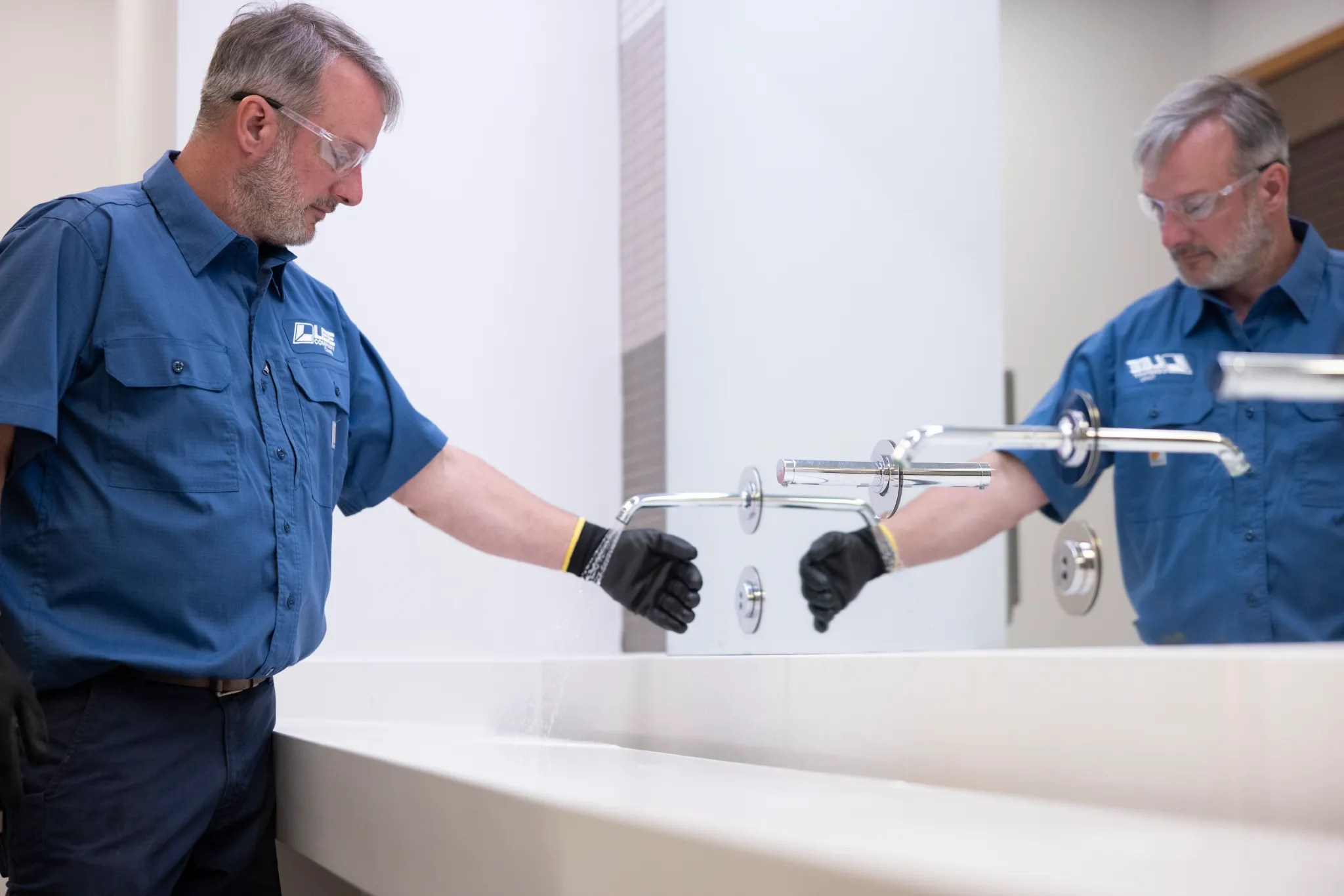
Our residential plumbing services include leak detection and plumbing repairs when moisture comes from pipes or fixtures inside your home.
Our plumbing team also installs smart leak detection that automatically shuts off your water when it detects a leak, helping limit damage before a small leak turns into a bigger mess.
Check Soft, Sagging, or Crumbling Drywall
Drywall that starts to feel soft or lose its shape has usually taken on more water than it should.
Check the drywall for these signs of moisture damage:
- Soft spots when you press very lightly
- A ceiling that starts to sag
- Drywall tape pulling away at the seams
- Joint compound crumbling around screws
- Walls that look swollen or warped
Do not press on a badly sagging ceiling. Wet drywall can lose enough strength to fall.
Because we handle both plumbing repairs and drywall repair services, we can fix the source of the water first and then repair the damaged wall or ceiling. That keeps the process simple, so you don’t have to juggle multiple contractors!
Take Musty Smells or Visible Mold Seriously
A persistent musty smell near a wall or ceiling can mean there’s moisture where you can’t see it. Visible black, green, or fuzzy growth can also develop when damp building materials stay wet.
Pay attention when the smell gets stronger after rain or after the room has been closed up for a while. In Southeast homes, high humidity can keep damp materials from drying out, which may make a musty smell stronger or allow mold to keep growing.
“A lot of times, the homeowner smells something before they ever see anything. We’ll check under the house for damp wood or insulation and look at the plumbing around that area. If something points us toward a supply-line leak, we may check the water pressure too.” – Licensed Plumber at Lee Company
Poor crawl space maintenance can also allow moisture to build up below the home, which can contribute to damp conditions and mold growth inside. Our team can inspect your crawl space and recommend ways to help control that moisture.
Find the Water Source Before Repairing the Drywall
Find and stop the water source before repairing water-damaged sheetrock. Otherwise, new drywall or paint can get wet again, and you are back where you started.
Water inside a wall or ceiling can come from several parts of the home.
Our team handled 800+ residential water damage and moisture calls over the past year.
Here’s where the water was coming from:
- 35% involved plumbing pipe, supply, or drain leaks.
- 25% involved A/C condensate, drain pan, or attic-unit leaks.
- 18% involved roof, flashing, or storm-driven water intrusion.
- 10% involved bathroom or kitchen fixtures and overflows.
- 6% involved water heaters or appliance leaks.
- 6% had another cause.
That means wet drywall doesn’t always tell you which trade needs to fix the problem. A stain below an attic unit may lead us in a very different direction than moisture beside a dishwasher.
If an appliance caused the leak, our appliance repair services also cover leaking dishwashers and refrigerators. We’ll troubleshoot the appliance, explain what we find, and let you know what needs repair before any work starts.
As professionals, we use tools such as moisture meters or infrared thermal cameras to narrow down where the water is coming from.
One of our technicians explained why those tools matter when the leak is hidden:
“Sometimes there’s no obvious drip to follow. Could be a pipe in the wall, something above the ceiling… That’s when the moisture meter or thermal camera helps us narrow down where to start looking.”
If a burst pipe or major leak is actively putting water into your home, our 24/7 emergency repair service can dispatch help for water damage and flooding. The emergency process includes assessing the problem and explaining what happens next.
Protect the Area Until the Leak Is Repaired
Once you spot signs of drywall water damage, take a few simple steps to keep the area from getting worse while you wait for the leak to be repaired. The safest next move depends on where the water is coming from and how much damage you can see.
- Stop the water source if possible: Shut off the nearby fixture or your home’s main water supply when an active plumbing leak is causing the damage.
- Move belongings out of the area: Furniture and electronics can all be damaged if the leak spreads.
- Catch active drips: Place a bucket or container underneath a small ceiling drip if you can do so safely.
- Keep people away from sagging drywall: A ceiling that is holding water can become heavy enough to fall.
- Take photos of the damage: Pictures can help you track whether the stain or damaged area is getting larger. This will also help you if you need to file an insurance claim later.
Storm-related leaks may need a different approach. Avoid climbing onto a wet roof or trying to patch flashing during bad weather. Once conditions are safe, check the roof or exterior opening so more rain doesn’t keep reaching the drywall.
For Southeast homeowners, heavy rain and humid weather can make water damage spread quickly. Taking precautions while you wait for service can help protect the room and give your technician a clearer picture of what happened.
When you call us, we can help determine which service your home needs first and coordinate the next step from there.
Repair the Drywall After the Leak Is Fixed
Repair water-damaged drywall after fixing the source of the problem. The amount of repair depends on how wet the drywall became and whether the material has softened or deteriorated.
Some staining may only affect the finished surface. Drywall that has lost strength may need damaged sections removed and replaced.
Having several home services under one roof can make this easier. Our team handles plumbing problems, A/C issues, and drywall repairs, so we can address the source of the water and help restore the affected area.
Schedule Service When Drywall Damage Keeps Coming Back
If you’ve already repaired the drywall and the damage returns, schedule a professional inspection. We can identify the water source and bring in the right service based on what we find.
We’ve been helping homeowners take care of their homes since 1944, and today our Home Services are available across Tennessee, Alabama, Kentucky, and Georgia.
Drywall damage that keeps coming back usually means the moisture problem hasn’t been fully fixed. Call us, and let’s get your home back in good shape.
FAQs About Drywall Water Damage
How can you tell if drywall has water damage?
Look for water stains, soft spots, peeling paint, or a musty smell. A spot that gets darker after rain or plumbing use can help you or a professional figure out where the active moisture problem is originating.
How do you dry drywall after water damage?
Drywall should be dried only after you stop the water source. Remove standing water first, improve airflow with fans, and use a dehumidifier if the area is damp. Drywall that feels soft, sags, or starts to crumble may need to be replaced instead of dried.
Does water-damaged drywall always need to be replaced?
No. Whether drywall needs replacement depends on the extent of the damage and whether the material has lost strength. A professional can evaluate the affected area after the water source is stopped.
When should drywall be replaced after water damage?
Replace drywall when it has lost strength, started sagging, feels soft, or shows signs of mold. Drywall that stays firm and only has light surface staining may be repairable once the area is fully dry.
Can a ceiling water stain come from A/C equipment?
Yes. An attic A/C unit or condensate drain problem can send water into a ceiling. In our service data, about 25% of moisture-related calls involved A/C condensate or related leaks.
How much water does it take to damage drywall?
It doesn’t take a large leak to damage drywall if the material stays wet long enough. Even a slow pipe leak or steady drip can soak into the paper and gypsum over time, which is why small stains and soft spots are worth checking early.