How can you improve the value of a commercial building? By fixing the issues that drag it down: Aging equipment, rising energy costs, and spaces tenants don’t want to renew.
When comfort complaints grow and repair bills spike, value slips fast. Smart upgrades and disciplined maintenance change that trajectory.
We’ve seen which improvements move the needle. Here’s what to prioritize.
Building Enhancements That Drive Market Value
The four fastest ways to increase commercial property value are:
- Improving curb appeal
- Upgrading lobbies and common areas
- Adding tenant-focused amenities
- Bringing your building up to modern smart-technology standards
These upgrades shape how tenants feel about the property from the very first glance, which affects lease-up speed, renewal decisions, and overall ROI.
When a building looks cared for and operates smoothly, decision-makers notice (and so do the tenants who write the checks).
Boost Curb Appeal to Elevate Perceived Value
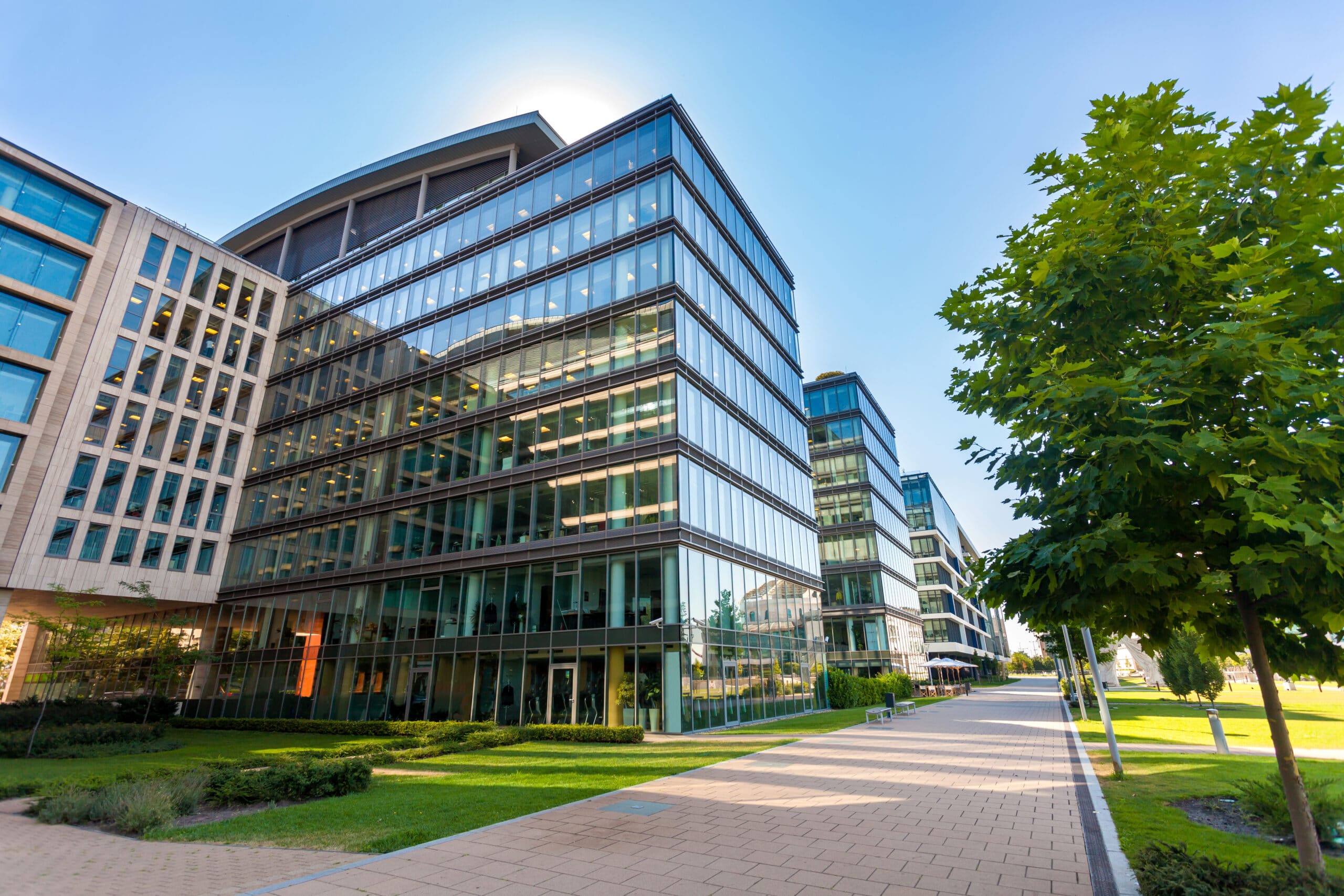
Exterior upgrades like facade improvements, fresh landscaping, lighting, and signage instantly raise the perceived value of a commercial property.
Prospective tenants decide within seconds whether a building feels safe, modern, and worth touring.
A few high-impact exterior improvements include:
- Refreshing paint or repairing siding and cladding
- Upgrading parking lot lighting and restriping
- Installing clear, modern signage and wayfinding
- Adding greenery, seating, or shaded entry areas
Even modest exterior updates make brokers more confident in showing the space and help tenants picture themselves there.
Modernize Lobbies and Common Areas for a Strong First Impression
Updating lobbies and shared areas improves first impressions and supports higher lease rates.
People equate the quality of a lobby with the quality of the entire building. If it feels dated or dimly lit, the rest of the tour becomes an uphill climb.
Meaningful upgrades include:
- New flooring and brighter, energy-efficient lighting
- Clean, modern finishes in corridors and restrooms
- Updated reception areas or digital directories
These improvements also reduce maintenance headaches since durable, easy-to-clean materials hold up better over time.
Add Amenities That Tenants Actually Use
Amenities increase property value by improving satisfaction, renewal rates, and lease-up speed. Tenants are looking for buildings that support productivity and day-to-day convenience.
High-value additions include:
- Fitness or wellness rooms
- Shared conference or training spaces
- Break areas, collaboration zones, or focus rooms
- Bike storage, showers, and EV charging
Before investing, ask tenants what would genuinely make their workday easier. The right amenities pay for themselves through stronger retention.
Use Smart Building Technologies to Improve Efficiency and Safety
Smart building technology makes a building safer, easier to run, and more efficient.
These tools help reduce wasted energy, prevent unauthorized access, and give facility teams real-time insights into performance:
- Access control
- Lighting controls
- Occupancy sensors
- Building management systems
Remote monitoring gives you a heads-up before something breaks, which means fewer surprise service calls and fewer headaches.
These system upgrades work best when Heating, Ventilation, Air Conditioning (HVAC), electrical, and controls teams coordinate early, which is why many owners choose partners who understand how all three systems interact.
Energy Efficiency and Sustainability Upgrades
The clearest path to increasing commercial property value often starts with energy-focused upgrades:
- HVAC retrofits
- Lighting improvements
- Insulation and window upgrades
- Onsite renewables
- Certifications like ENERGY STAR or LEED
These projects lower utility spend, appeal to sustainability-minded tenants, and make the building more resilient over time.
Many owners see these as some of the most predictable, high-return improvements they can make.
HVAC and Lighting Retrofits That Make an Immediate Impact
HVAC and lighting upgrades are high-impact, directly affecting utility costs, occupant comfort, and how smoothly the space operates day after day.
Consider upgrades like:
- High-efficiency chillers, boilers, and rooftop units
- Variable frequency drives and updated HVAC controls
- LED lighting paired with occupancy or daylight sensors
ENERGY STAR reports that energy-efficient commercial buildings use up to 35% less energy. Lighting alone accounts for about 17% of a building’s average energy use.
That makes LEDs one of the fastest payback wins.
Beyond the savings, these upgrades reduce service calls and help eliminate hot-and-cold spots that drive tenant complaints.
Insulation and High-Performance Windows for Better Comfort and Lower Costs
Improving insulation and upgrading windows reduces heat gain and loss, which lowers utility bills and keeps indoor temperatures more stable.
It also gives your HVAC system a break, extending equipment life.
Envelope improvements include:
- Better roof and wall insulation
- Low-e windows
- Window films that help with heat and glare
Good insulation and envelope upgrades can reduce heating and cooling demand by 20-30%.
Tenants will immediately notice fewer drafts, less noise, and a more comfortable workspace.
If you want to see exactly where your building is losing energy, a thermal scan can guide where to invest first.
Solar Panels and Onsite Renewables for Long-Term Savings
Rooftop solar and other onsite renewable systems can significantly lower operating costs and strengthen the building’s long-term financial performance.
Many commercial solar installations achieve a quick 6- to 8-year payback, with long-term savings that continue well beyond that window.
Buildings often install:
- Rooftop photovoltaic (PV) systems
- Solar carports in parking areas
These upgrades stabilize utility costs and appeal to tenants who prioritize sustainability.
Before moving forward, be sure to evaluate structural capacity, utility requirements, and incentive programs to maximize your ROI.
LEED, ENERGY STAR, and Other Certifications That Boost Market Appeal
Green building certifications can lift rent potential, improve occupancy, and strengthen your building’s reputation in a crowded market.
LEED focuses on sustainability throughout the building’s design and operation, while ENERGY STAR evaluates overall efficiency.
ENERGY STAR-certified buildings often see 3-16% higher occupancy rates, 2-8% higher rental rates, and sale prices 1-31% higher than those of similar non-certified buildings.
By putting numbers behind your efficiency efforts, certifications turn behind-the-scenes improvements into measurable market value. They help tenants trust the building and help owners defend higher rates.
Maintenance, Safety, and Compliance Improvements
Strong maintenance and compliance practices make the building easier to operate and give buyers and tenants confidence that the property is stable for the long haul.
When equipment runs reliably, safety systems pass inspections, and codes are up to date, you avoid expensive downtime, protect people, and prevent the kinds of emergencies that drain budgets and erode asset value.
Preventive Maintenance Programs That Preserve Asset Value
Preventive maintenance increases reliability, extends equipment life, and keeps your building from losing value through avoidable failures.
Reactive maintenance waits for something to break. Preventive maintenance catches problems long before they turn into shutdowns.
A solid preventative maintenance program usually includes:
- HVAC tune-ups and seasonal inspections
- Electrical inspections and panel checks
- Plumbing, drainage, and backflow testing
- Roof drain cleaning and moisture checks
Planned maintenance can cut equipment breakdowns by up to 75%, reducing repair costs and helping systems last longer.
When one partner handles HVAC, electrical, plumbing, and building controls together, all maintenance becomes much more efficient.
We offer multi-trade Facilities Management and Maintenance programs that help owners stay ahead of issues instead of reacting to them.
Fire Protection and Life Safety Upgrades That Strengthen Marketability
Building safety systems directly influence occupant safety and building risk (two factors that affect everything from insurance premiums to overall property value).
Sprinklers, fire alarms, emergency lighting, and clear egress routes all contribute to how safe and well-managed a building feels.
Common upgrades include:
- Modern fire alarm panels
- Exit and emergency lighting
- Fire-rated doors and proper egress hardware
ADA and Code Compliance That Protects Value
Keeping up with accessibility requirements and evolving building codes helps you avoid fines, prevent lawsuit exposure, and eliminate last-minute retrofits that wreck budgets.
These gaps often appear during due diligence and can threaten a deal if you don’t address them.
Key areas to evaluate include:
- ADA-compliant entries, ramps, restrooms, and parking
- Updated mechanical, electrical, and ventilation code requirements
- Correct egress signage and lighting
Regular Property Inspections and Capital Planning for Predictable Costs
Recurring inspections and a structured capital plan help you time major upgrades, spread out investments, and protect long-term property value.
Without them, problems like structural wear, roof deterioration, and equipment decline tend to surface only after they become expensive emergencies.
Inspections help you with long-term capital planning:
- Future roof replacement cycles
- Chiller, boiler, or RTU end-of-life
- Parking lot resurfacing
- Elevator modernization
Planned capital improvements deliver a much stronger ROI than deferred maintenance. That’s because strategic upgrades avoid emergency premiums and prevent the ripple effects of system failures.
With predictive maintenance, we help commercial building owners and facility managers in the Southeast prioritize the improvements that protect value, reduce risk, and keep the building performing year after year.
Facility Maintenance Helps You Increase Commercial Property Value
You can increase the value of your commercial building by pairing smart upgrades with reliable, well-planned maintenance.
An experienced facilities partner like us can help you figure out what to tackle first, how to budget for it, and how to get it done without slowing down your operations.
Curious which changes would lift your property value fastest? Request an appointment and get a clear, practical roadmap based on your building’s current condition.
Frequently Asked Questions
How can I increase the value of my commercial building the fastest?
The fastest gains usually come from curb appeal improvements, upgraded lobbies and common areas, and high-impact energy projects like lighting and HVAC retrofits.
These are the changes tenants notice immediately, and they often come with reasonable payback periods and stronger leasing activity.
How much can energy efficiency projects improve my building’s value?
Energy upgrades improve value by lowering operating costs and supporting certifications that tenants look for. Earlier in this article, you saw how efficient buildings can significantly cut energy use; savings that directly strengthen net operating income and long-term valuation.
How often should I review my building for major upgrades?
Most owners revisit upgrade priorities at least once a year during budgeting and capital planning. Pairing this with routine inspections helps you catch problems early and avoid emergency spending.
Do I need to renovate the entire building to attract better tenants?
No. Many buildings see strong results from targeted improvements instead of full gut renovations.
Refreshing lobbies, upgrading lighting, improving restrooms, or adding modern access control can dramatically change how tenants perceive the space.
When should I involve a facilities services partner?
It’s best to involve a facilities partner early, before you set budgets or scopes.
If your commercial building is in Tennessee, Kentucky, Alabama, or Georgia, request an appointment. We’ll help you identify hidden issues, coordinate HVAC, electrical, plumbing, and controls work, and build a phased plan that fits your financial goals.