Crawl space encapsulation protects your home’s foundation by controlling moisture that causes long-term damage below the floor.
Smell something musty? Floors feel a little soft or uneven? That usually starts in the crawl space.
In this guide, you’ll learn how crawl space moisture can turn into expensive foundation damage (and what prevents it).
What Is Crawl Space Encapsulation?
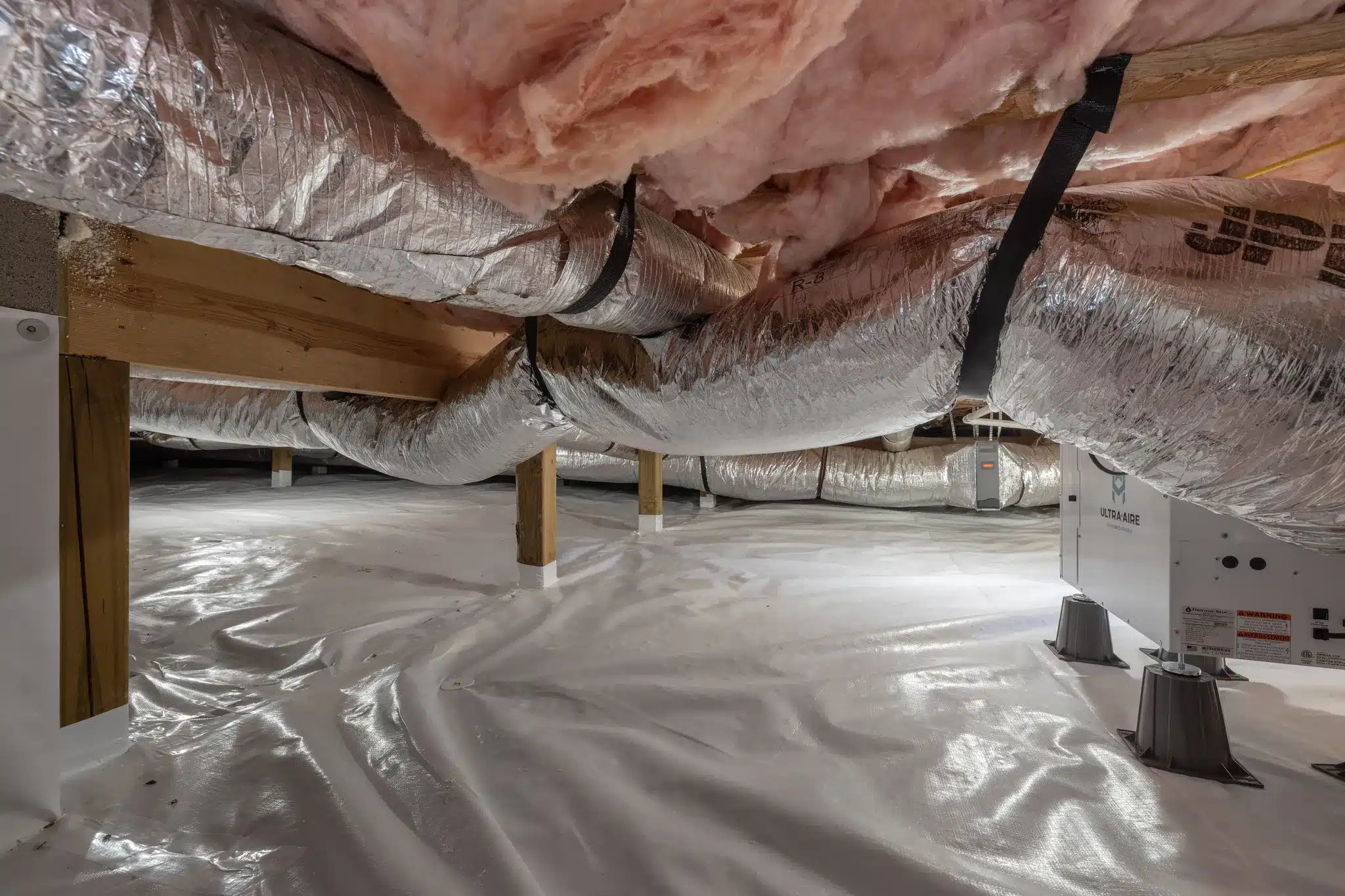
Crawl space encapsulation seals the space beneath your home to block moisture and control humidity before it causes structural problems.
Instead of leaving the crawl space open to damp soil and outdoor air, encapsulation creates a controlled, always-dry environment.
Most systems include:
- Vapor barrier installation to cover exposed ground
- Sealing vents and gaps where humid air leaks in
- Moisture control, like drainage or a dehumidifier, when conditions call for it
In the Southeast, open crawl spaces can stay wet year-round due to humidity and nearly 60 inches of annual rainfall.
That’s why crawl space encapsulation is one of the first solutions we evaluate when comfort issues or structural concerns point below the floor.
How Moisture Affects Your Home’s Foundation Step-By-Step
Moisture damages foundations by changing how the ground behaves. The result: rotting wood slowly stresses the home’s structure.
This doesn’t happen overnight, and it’s all happening out of sight, which is why it’s easy to miss.
Here’s how the damage shows up over time:
Step 1: Excess moisture builds up in the crawl space
In the Southeast, crawl spaces often sit above 60% humidity, which promotes mold and mildew growth. Warm, damp air gets trapped under the house, and moisture has nowhere to go.
Step 2: Wood supports start to weaken
Floor joists and beams absorb that moisture over time. As the wood stays damp, it softens and begins to break down. This is often when homeowners notice musty smells or floors that feel soft or uneven.
Step 3: The ground under the home starts to shift
Wet soil swells. When it dries, it shrinks. That constant movement changes how the foundation is supported, putting stress on the structure above.
Step 4: Floors settle and become uneven
As wood weakens and the ground shifts, the home slowly settles. Floors slope, doors stick, and cracks appear in the foundation, drywall, and other parts of your home.
This order matters because once moisture gets a foothold in the crawl space, everything else follows.
Without crawl space moisture control, the damage keeps moving upward into the structure.
Why Crawl Space Moisture Is More Common in the Southeast
Homes in the Southeast deal with crawl space moisture more than almost anywhere else in the U.S. That’s because of a mix of high humidity, rainfall, and soil that holds onto moisture instead of drying out.
When you compare regions, crawl space moisture problems are most common in:
- The Southeast, due to long stretches of humidity and heavy rainfall.
- The Mid-Atlantic, because rain, snowmelt, and humid summers keep the ground wet.
- The Pacific Northwest, where non-stop rain in multiple seasons limits drying time for much of the year.
That pattern also shows up in our own work. Based on data of crawl space inspections across the Southeast, moisture problems tend to peak during specific times of the year:
- April is consistently the busiest month for crawl space encapsulation.
- May through July stay highly active as humidity and rainfall increase.
- Summer A/C season often brings crawl space issues to light while technicians are already inside homes.
In other parts of the country, homes are built on slabs. So, crawl space moisture isn’t even part of the conversation.
How Crawl Space Encapsulation Protects the Foundation
Encapsulation protects your foundation by stopping moisture before it has time to weaken the structure. The goal is to address the problem at the source rather than react once damage shows up.
When moisture stays out of the crawl space, it stops triggering the chain reaction that leads to sagging floors and structural stress.
Here’s how crawl space encapsulation provides that protection:
Reduced ground moisture
By sealing up exposed soil, crawl space encapsulation limits how much moisture can rise into the foundation area.
More consistent humidity
Keeping the crawl space dry helps control indoor humidity, which matters in our humid Southeast, where moisture never really takes a break.
Stronger floor supports
Wood framing lasts longer when it stays dry. Encapsulation protects those supports from rotting earlier than they otherwise would.
Fewer long-term repairs
When moisture stays under control, the foundation is less likely to crack, shift, or settle unevenly.
Concrete repairs, pier work, and foundation stabilization are some of the most expensive fixes a home can need.
Encapsulation helps reduce the conditions that lead to those problems in the first place.
A member of our team who sees crawl space issues firsthand put it this way:
“People think foundation problems come out of nowhere, but they usually don’t. We see moisture sitting in crawl spaces for years before anything shows up inside. Encapsulation just stops that cycle early.”
The sooner moisture is addressed, the more likely the fix stays straightforward and manageable.
Signs Your Crawl Space May Need Encapsulation
If you’re dealing with moisture-related issues inside or around your home, there’s a good chance the crawl space is involved.
Signs you’ll notice inside the home
- Musty or earthy smells that keep coming back, especially after a rain
- Floors that feel soft, uneven, or colder than the rest of the house
- Indoor humidity that stays high even when the A/C is running
- Mold or mildew near vents, baseboards, or lower walls
- Cracks that seem to worsen after wet weather
Signs around the home or in the crawl space
- Damp soil or standing water beneath the house
- Insulation that looks wet or sagging
- Visible mold on wood or surfaces below the floor
In the Southeast, these symptoms often come and go with the weather, which makes them easy to ignore. Finding these signs early can help avoid more involved crawl space repair later.
What Homeowners Can Check Safely
Homeowners can spot early crawl space moisture issues without crawling under the house. In fact, many of the first warning signs show up where you already spend time.
Safe things to check:
- Crawl space access areas for dampness, staining, or musty smells
- Indoor air and humidity, especially if it feels sticky for days at a time
- Floors for sagging, softness, or cold spots that don’t match the rest of the house
Do not enter a wet crawl space or try to inspect underneath your home. Mold, pests, and uneven surfaces make it unsafe. If multiple signs show up together, it’s usually worth having the crawl space professionally inspected by a licensed technician who knows what to look for.
What Crawl Space Encapsulation Solves
Crawl space encapsulation addresses the root causes of moisture problems instead of chasing the symptoms you keep noticing inside the house.
Rather than masking smells or running the A/C harder, it tackles the source of the moisture.
| Problem | How Crawl Space Encapsulation Fixes It |
| Damp soil under the home | Seals the ground to block moisture from rising |
| Musty smells | Stops damp air from moving up into the house |
| Mold or mildew growth | Keeps the space dry so mold can’t grow |
| Cold floors or sticky indoor air | Helps stabilize indoor humidity and temperature |
| Foundation shifting or settling | Reduces soil movement under the home |
When moisture is controlled below the house, everything above it has a better chance of staying more comfortable and in good condition.
When to Invest in Professional Encapsulation
If crawl space moisture is starting to feel like a recurring problem instead of a one-time issue, that’s your cue to consider professional encapsulation.
Once structural changes show up, waiting usually makes things harder and more costly to fix.
Call for help if you notice:
- Ongoing moisture that returns after rain or humid weeks
- Mold or wood damage near the floor level
- Floor movement or cracking that keeps getting worse
Many times, a call about comfort or air quality ends up revealing moisture problems in the crawl space during inspection.
Through regular HVAC, plumbing, and electrical inspections, including those offered through our Lee Company+ membership, we’re often already in the home when early signs of crawl space moisture surface. That allows us to connect those symptoms to the real source and deal with the issue before it becomes a bigger problem.
In addition, crawl space maintenance then gives professionals a chance to monitor moisture conditions over time instead of reacting once damage has already set in.
Long-Term Benefits of Crawl Space Encapsulation
Encapsulation delivers long-term protection by keeping moisture under control year-round. For homeowners, that means fewer recurring problems and less chance of hidden damage slowly developing under the house without you knowing it.
Over time, that moisture control leads to:
- A more stable foundation with less shifting
- Cleaner air inside the home, with fewer musty smells
- Better energy efficiency, since the home holds air more evenly
- Peace of mind, knowing moisture isn’t quietly causing damage
As one of our technicians explained:
“When the crawl space stays dry, we see fewer problems pop up later. It’s one of those fixes that just keeps paying off.”
Protect Your Foundation Before Moisture Does More Damage
Protecting your foundation starts with controlling moisture beneath your home. Crawl space moisture does not fix itself. It gets worse, season after season, until the damage gets out of control and major repairs are needed.
Fortunately, you don’t have to wait for visible damage. Professional crawl space encapsulation helps stop moisture at the source and protect everything above it.
We provide crawl space evaluations and services across the Southeast with licensed technicians who know where moisture problems typically start.
Homeowners trust us for foundation protection, reflected in our 4.8-star rating from more than 14,000 reviews.
Request a professional crawl space inspection and get clear answers about what’s happening under your home.
Crawl Space Encapsulation FAQs
What does crawl space encapsulation do?
Crawl space encapsulation seals the area beneath your home to control moisture before it causes structural or air quality problems. By installing a vapor barrier, sealing vents and gaps, and managing humidity, you create a dry environment that protects your foundation and the air you breathe upstairs.
Is crawl space encapsulation worth it?
Yes, crawl space encapsulation is often worth it when recurring moisture or water intrusion is affecting comfort, air quality, or the home’s structure. It helps prevent costly crawl space repair and foundation damage by addressing the problem early instead of reacting after visible damage appears.
Can a dehumidifier alone fix crawl space moisture?
A dehumidifier alone usually isn’t enough to fix crawl space moisture long-term. Without sealing the ground and outside air sources, moisture keeps entering the space, forcing the dehumidifier to work harder while the underlying issue remains.
How do I know if moisture is affecting my foundation?
Signs include musty smells, soft or uneven floors, worsening cracks, visible mold, puddles or pooling water in the crawl space, or moisture that returns after rain or humid weather. Because much of the damage starts out of sight, a professional inspection is often the best way to confirm whether crawl space moisture is impacting your foundation.