Heat pumps often struggle in cold weather because they pull heat from outdoor air, and winter air simply has less heat to move indoors.
That’s why rooms feel uneven, and the system never seems to shut off.
If you’re dealing with a heat pump blowing cold air, we’ll explain what’s normal and what might need attention.
How a Heat Pump Works (And Why Cold Weather Changes Performance)
A heat pump system extracts heat from outdoor air and transfers it indoors.
Unlike a furnace, it doesn’t create heat. It moves what’s already there, even when temperatures are low.
As outdoor air gets colder, there’s less heat available to pull in. That doesn’t mean the system is broken. It means performance changes as temperatures drop.
How a Heat Pump “Moves” Heat Instead of Creating It
Many homeowners misunderstand how a heat pump vs. a furnace works.
- A furnace burns fuel to generate heat.
- Heat pumps use electricity to transfer heat from one place to another.
Because of that difference, air-source heat pumps can produce 2 to 4 times more heat energy than the electricity they consume. The tradeoff is that efficiency depends heavily on outdoor conditions and system setup.
Why the Air Feels Cooler Than a Furnace
Heat pumps deliver steady, lower-temperature air over longer periods instead of short blasts of hot air.
The air isn’t actually cold; it just feels that way compared to furnace heat (especially on extremely cold days).
That said, supply air should still be warmer than the room. If it’s truly cold, something isn’t right.
Signs Your Heat Pump Is Struggling in Cold Weather
- Your home won’t reach the set temperature.
- The system runs constantly.
- Ice starts building up on the outdoor unit.
- Air from the vents feels colder than it should.
- Energy bills spike without a clear reason.
- The system keeps switching to emergency heat.
These are the first things homeowners notice when something isn’t right. Cold weather does change how a heat pump behaves, but these signs often point to more than normal winter use.
The sections below break down what each one means and how serious it might be.
Rooms Just Don’t Warm Up
If certain rooms stay cold no matter how long the system runs, that’s often a sign the heat pump can’t keep up with the cold.
A rough morning after a temperature drop can happen, but dealing with uneven comfort day after day usually means one of a few things is going on:
- Airflow is restricted, often from dirty filters or blocked vents.
- The system is undersized for the home or the current weather conditions.
- Heat loss is high, usually due to poor insulation or leaks in the air ducts.
- Air isn’t being distributed evenly, leaving some rooms colder than others.
When comfort never catches up, it’s usually more than just winter being winter.
The System Never Seems to Shut Off
We expect longer run times in winter. What’s concerning is the nonstop operation paired with little improvement in comfort.
Heating and cooling make up more than 40% of total home energy use, so performance issues tend to show up quickly on utility bills.
Compare your bill to the same time last year and see if it looks higher than usual.
Air From the Vents Feels Colder Than Expected
Air from a heat pump will feel cooler than furnace heat, but it should still be warmer than the room.
If the air feels truly cold for long stretches, it can point to:
- Defrost cycles running too often (or not ending properly)
- Refrigerant or airflow issues
- A system that’s falling behind the outdoor temperature
Ice Keeps Building Up Outside
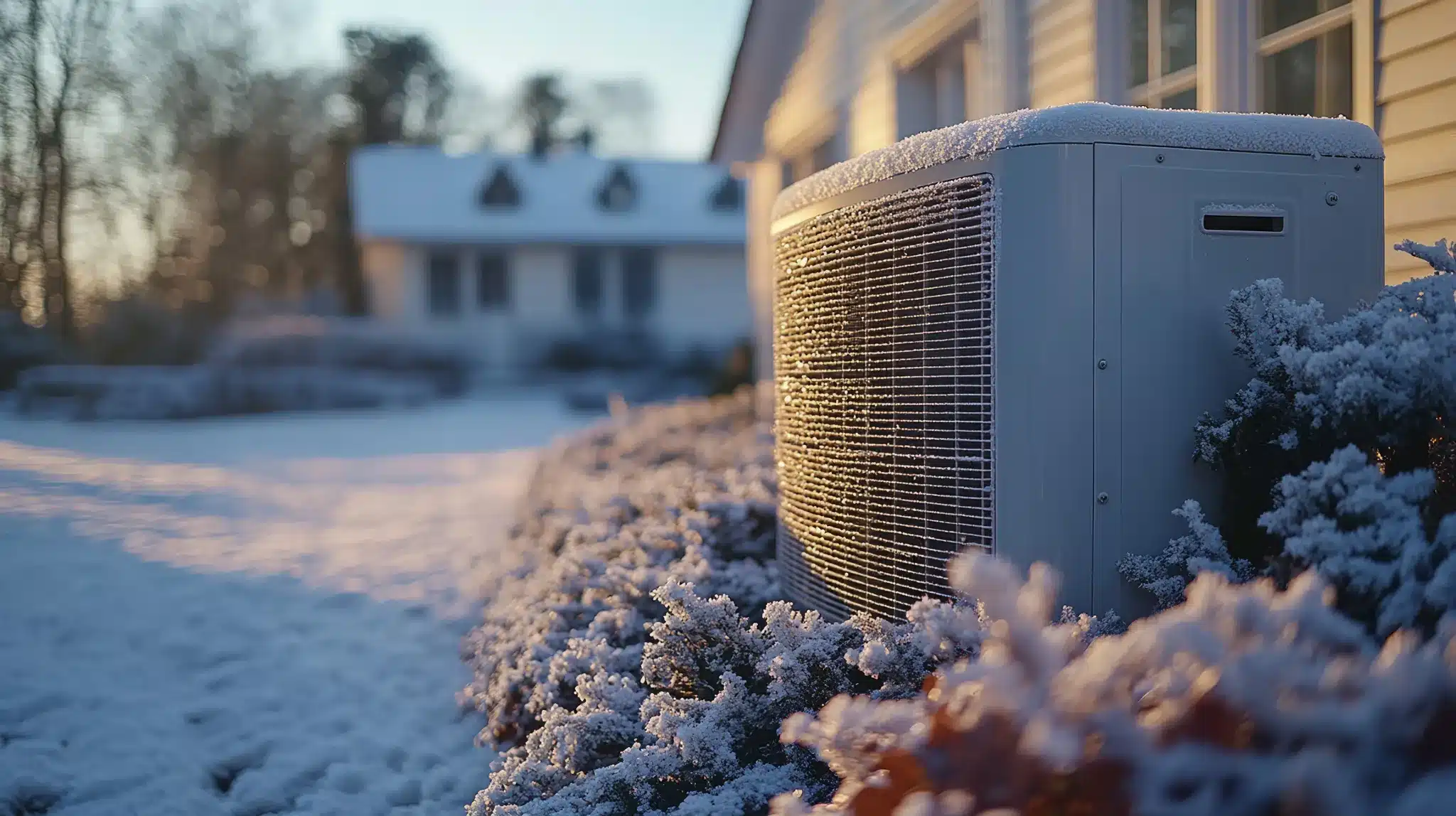
A small layer of frost on the outdoor unit can be normal in cold weather. What’s not normal is thick ice that keeps coming back or never seems to clear.
When ice doesn’t clear, the system can’t absorb heat properly, which explains why the house feels colder even though the heat pump is running.
Ice buildup usually points to issues like:
- A defrost cycle that isn’t working correctly, so ice never fully melts.
- Restricted airflow around the unit, often from debris or packed snow.
- Low refrigerant levels, which reduce the system’s ability to move heat.
- Electrical or control problems that prevent proper defrost timing.
This is one of those situations where continuing to run the system can make things worse.
Emergency Heat Kicks On More Than Expected
If your system keeps switching to emergency heat, it’s a sign the heat pump is struggling to meet demand on its own.
Emergency heat is a backup heating mode (usually electric resistance heat) that turns on when the heat pump can’t keep up or stops working efficiently.
It’s designed for short-term support, not everyday heating.
Frequent emergency heat use usually means:
- The heat pump can’t keep up with the cold.
- There’s a performance or efficiency issue.
Because emergency heat uses significantly more electricity, this is one of the fastest ways winter comfort problems turn into expensive utility bills.
Common Cold Weather Problems That Stop a Heat Pump From Heating
In our experience, most cold-weather heat pump problems fall into a few predictable categories:
- Airflow restrictions
- Defrost cycle issues
- Control or thermostat problems
- Refrigerant issues
- System limitations
One of our senior HVAC technicians puts it this way:
“Fall is forgiving. Winter isn’t. A system can limp along when it’s mild outside, but once the temperature drops, all the missed maintenance shows up.”
That’s why these problems often feel like they came out of nowhere, even though they’ve usually been building well before winter arrived.
What These Problems Usually Look Like
- Outdoor units blocked by leaves, debris, or frozen moisture
- Defrost cycles that don’t fully clear ice
- Dirty filters limiting indoor airflow
- Controls or sensors that can’t keep up with rapid temperature changes
- Older or undersized systems hitting their capacity limit
Cold weather doesn’t create the problem; it removes the margin for error.
Easy Checks Homeowners Can Try Before Calling for Service
- Check that the thermostat is set to “Heat” (not “Cool” or “Auto”).
- Raise the set temperature a few degrees above room temperature and listen for a response.
- Clean or put in a new air filter if the current one is dirty (winter run times clog filters faster).
- Clear 2 to 3 feet around the outdoor unit so it can pull in air.
- Gently brush off loose snow or debris from the outdoor unit.
- Make sure supply and return vents are open and not blocked by furniture, rugs, etc.
These quick checks won’t fix deeper problems, but they can help explain why a heat pump is blowing cold air or struggling to keep up in cold weather.
If these steps don’t help, we can safely diagnose the issue and recommend the right fix.
Important safety note for homeowners:
- Don’t mess with your home’s electrical
- Don’t handle the refrigerant
- Don’t chip or break ice
Should You Repair or Replace Your Heat Pump?
Deciding whether to repair or replace a broken heat pump comes down to how the system behaves during cold-weather demand.
Some issues point clearly to routine maintenance or repair. Others signal that the system has reached the point where HVAC replacement needs to be discussed.
To help homeowners understand how those individual decisions usually shake out, here’s what winter heat pump problems typically look like in the field:
| What Your Winter Heat Pump Problem Means | |||
| What You’re Seeing | What’s Happening | What Happens Next | How Urgent Is This? |
| System runs nonstop or room temperatures feel uneven | Airflow or defrost issue | Maintenance often fixes it | Soon, but not an emergency |
| Ice keeps forming or breakers trip | Electrical or defrost problem | Targeted repair | High, stop running the system |
| House never warms up | System too old or too small | Replacement talk | Moderate to high, depending on comfort and costs |
How to read this:
- If comfort improves after maintenance or a focused repair, replacement usually isn’t needed.
- If the home never reaches temperature even after service, it’s often a capacity or age issue (not a quick fix).
A professional HVAC contractor can help you move past guesswork and understand when a repair makes sense and when replacement is the more realistic next step.
What Heat Pump Repair Data Reveals
Looking at a recent internal snapshot of our service data from November through February last year, heat pump problems make up a smaller portion of total heating calls, but they tend to surface when temperatures drop, and systems are under the most strain.
Across all heating calls, approximately 10% involved issues with heat pump performance.
The pattern is consistent:
Cold weather doesn’t usually cause heat pump problems, but it does expose them.
Minor airflow restrictions, defrost issues, or capacity limits that go unnoticed in mild weather become obvious once temperatures fall and comfort is harder to come by.
What That Means for Homeowners
- Many winter problems could have been caught earlier.
- Waiting usually makes things louder, colder, and more expensive.
Addressing heat pump issues early keeps repairs simpler, protects electrical components, and helps you avoid replacement conversations sooner than necessary.
When to Call a Professional for a Heat Pump Not Working in Cold Weather
Call for service if you notice:
- The outdoor unit is buried in ice
- Breakers keep tripping
- Grinding, buzzing, or metal noises
- Cold air even after basic checks
- Damaged wiring or lines
Letting a struggling heat pump keep running can turn a manageable repair into a much bigger bill.
“The biggest mistake we see is people hoping it’ll sort itself out. When a system is already struggling, and you keep pushing it, everything downstream works harder. Motors, controls, electrical parts … they’re all under stress. What could’ve been a simple fix turns into a much bigger problem just because it ran too long.”
– Senior HVAC Technician
How to Help Your Heat Pump Perform Better Next Winter
- Schedule maintenance before winter (not during)
- Keep the outdoor unit clear all year round
- Change filters regularly
- Seal air leaks and improve insulation where heat escapes
- Upgrade older thermostats
Heat pumps can reduce energy use by up to 47%, but only when the system is set up and cared for correctly.
Our Lee Company+ membership helps with routine inspections, priority service, and member discounts, so you get better performance and fewer surprises when temperatures drop.
Professional Heat Pump Repair for Cold Weather Problems
Professional heat pump service can bring back comfort, prevent damage, and keep your winter bills from spiraling.
Whether it’s maintenance, a repair, or just honest guidance on replacement, our experienced team helps homeowners deal with issues before they snowball.
With licensed and insured technicians, decades of experience, and a 4.8-star rating from more than 14,000 reviews, we’re here for you! Contact us to schedule heating services in the Southeast.
Heat Pump FAQs for Cold Weather
How cold can a heat pump work?
Most modern heat pumps work below freezing, but they lose efficiency as temperatures drop.
Should a heat pump run constantly in winter?
Longer run times are normal. Running nonstop with poor comfort is not.
Why does my heat pump blow cold air in winter?
The air feels cooler than furnace heat, but truly cold air points to a system issue.
How do I fix a heat pump freezing up in winter?
You can clear airflow and change filters, but repeated icing needs professional attention.
When should I use emergency heat?
Emergency heat is a short-term backup only. Frequent use means the heat pump can’t keep up.