Make-up air units replace the air your building pushes out, keeping pressure stable and operations running the way they should.
If energy costs are climbing, doors are hard to open, or hot and cold spots won’t go away, your air balance may be off. Even small exhaust upgrades can throw industrial ventilation systems out of sync.
Here’s how to spot problems with your make-up air unit so you can prevent bigger operational headaches.
What Is a Make-Up Air Unit?
A make-up air unit (MAU) replaces the air your building exhausts, helping maintain stable pressure and consistent air balance.
How Does a Make-Up Air Unit Work?
Every time an exhaust fan runs, it creates a pressure shift. The MAU brings in outside air at roughly the same volume. That air is filtered, then heated or cooled as needed before it’s delivered into the building through the ductwork.
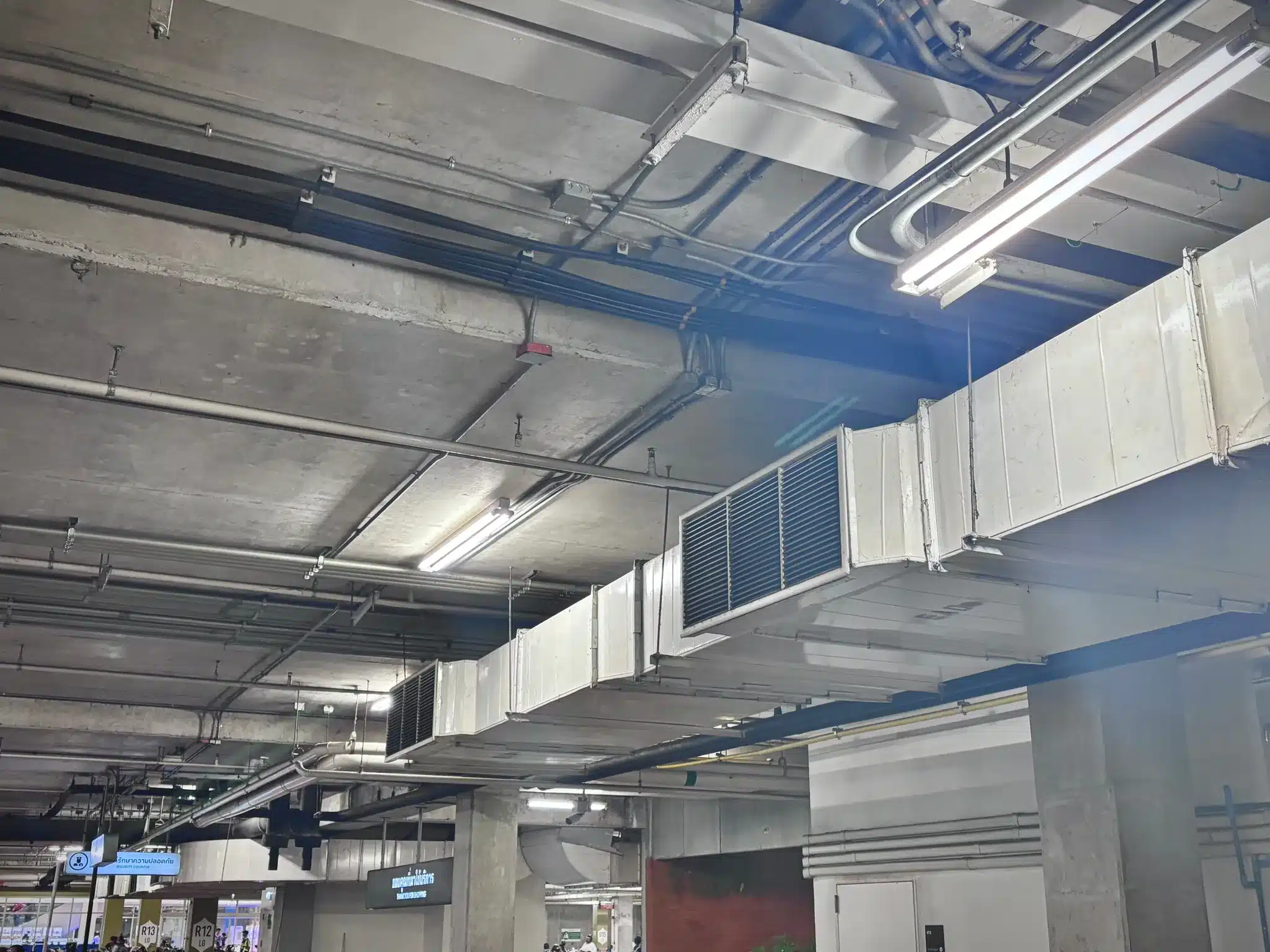
In industrial settings, MAUs are often installed on the roof near exhaust clusters or mounted along exterior walls.
MAUs are sized to match exhaust airflow so the building remains close to neutral pressure.
Sizing is typically based on the cubic feet per minute (CFM) of air being exhausted. If 10,000 CFM leaves the building, close to that amount must come back in to avoid negative pressure.
Typical Industrial Applications
Industrial make-up air systems are common in:
- Manufacturing floors running continuous process exhaust.
- Warehouses with heavy dock door activity.
- Food processing facilities managing humidity.
- Industrial kitchens with large hood systems.
- Paint booths, welding areas, and other high-exhaust zones.
Why HVAC Air Balance Affects Performance and Operating Costs
Good air balance means the air entering your building is roughly equal to the air leaving it.
When the airflow leaving your building doesn’t match the air coming back in, the entire facility starts compensating:
- Negative building pressure pulls untreated outdoor air through cracks, dock doors, and wall penetrations.
- Uneven temperatures trigger ongoing temperature complaints and thermostat adjustments.
- Mechanical equipment runs longer cycles, increasing wear and energy draw.
- Exhaust systems lose consistency when replacement air can’t keep up.
Heating, Ventilation, and Air Conditioning (HVAC) systems account for about 39% of a commercial facility’s energy consumption. In manufacturing environments, HVAC electricity represents around 8% of total electricity use.
When the air balance is off, that usage grows because the equipment runs longer (causing utility costs to rise).
In some facilities, ventilation instability can even slow down (or stop) production, or put employee safety at risk.
Our role is to identify where the imbalance is happening and correct it without shifting stress to another part of your industrial ventilation system.
How Make-Up Air Units Support Safety and Compliance
Ventilation affects how safely your people work, how your space holds up during inspections, and how well your processes stay on track.
If air is being removed but not properly replaced, effective ventilation drops.
Industry findings show that up to 40% of measured ventilation rates in buildings fall below recommended levels.
At the same time, industry standards such as ASHRAE 62.1 establish minimum outdoor airflow rates that many building codes reference.
That means ventilation volume is tied directly to compliance.
Ventilation Requirements
Exhaust is only half of what proper ventilation requires. Air has to be replaced in a controlled way.
Industrial make-up air systems help maintain the airflow volumes required to keep spaces within acceptable conditions.
For many industries, OSHA requires employers to control airborne hazards. Proper ventilation is often part of that obligation.
Combustion and Pressure Risk
In buildings with gas-fired equipment, negative pressure can affect combustion and venting.
If the building starts pulling air through cracks or unplanned openings, you lose control over airflow paths.
Contaminant and Fume Control
If exhaust is part of your process, replacement air is part of your safety plan.
Industrial buildings remove fumes, heat, and particles every day. Exhaust fans move that air out.
Make-up air keeps the airflow balanced, so contaminants are carried away rather than drifting back into occupied areas.
Properly functioning ventilation systems can reduce indoor carbon dioxide by about 30% and decrease contaminants such as radon and nitrogen dioxide.
Americans spend roughly 90% of their time indoors. In a facility environment, that means hours of continuous exposure.
When we walk through a building, we verify that replacement air keeps pace with exhaust so that ventilation can do what it was designed to do.
Operational Impact on Indoor Air Quality and Workforce Productivity
Indoor air quality affects how safely and efficiently your team can work during a full shift.
On a manufacturing floor or in a warehouse, employees are operating heavy equipment, forklifts, and working around heat loads under tight production schedules.
If the air feels stale or uneven, health and focus can decline, leading to more sick days and lower output.
Poor indoor air quality has been linked to:
- Headaches
- Fatigue
- Irritation of the eyes, nose, and throat
- Difficulty concentrating
That becomes a safety concern in businesses where people operate machinery.
Facility managers often see signs before they connect them to airflow:
- Hot spots near process lines or ovens.
- Stale air during peak production hours.
- Odors that became noticeable after an exhaust upgrade.
- More symptom complaints during certain seasons or shifts.
These patterns often trace back to air movement and HVAC air balance.
We review how industrial ventilation systems and make-up air units interact so you can address the source of the problem instead of reacting to symptoms.
Seasonal Pressure Problems: What Our Service Data Shows
Warm weather exposes pressure problems in commercial buildings. Roughly 70% of make-up air issues we respond to occur in spring and summer.
Facilities often report:
- Dock doors that do not close cleanly.
- Sticky, humid air near process lines.
- More comfort complaints during afternoon shifts.
- Odors becoming more noticeable after exhaust changes.
Higher outdoor humidity, especially here in the Southeast, increases the impact of even small airflow imbalances.
We saw this firsthand at a dog food manufacturing plant, where humidity issues tied to an air-cooled compressor became far more noticeable once warmer weather set in. Correcting airflow at the system level stabilized employee comfort and product conditions.
In healthcare environments, like our work with Hospital Corporation of America, even small ventilation instability during peak cooling season can affect reliability expectations.
When HVAC air balance drifts, cooling demand rises, and pressure shifts become more noticeable.
Spring and summer are not the time to discover that your industrial ventilation systems are struggling. This is also when production is often running at full pace.
We work with facilities ahead of peak season to check airflow and stabilize make-up air units before problems show up on the floor.
Signs Your Facility May Need a Make-Up Air Evaluation
- Doors are hard to open or slam shut unexpectedly.
- Heating or cooling costs rise without a clear operational reason.
- Certain zones stay hot, cold, or humid no matter how you set the thermostat.
- Drafts increase near docks and doors.
- Exhaust was upgraded, added, or runs longer than it used to.
- Equipment and machinery short cycle or struggle to maintain setpoints.
- Odors linger or return quickly after “fixes.”
Individually, these can seem like maintenance issues. Together, they often point to a pressure imbalance.
When we review industrial ventilation systems, we focus on HVAC air balance first. Make-up air systems are often what stabilize pressure and fix multiple complaints at once.
What Facility Managers Can Assess Internally
Before bringing in outside support, there are practical checks your team can make to spot early pressure imbalances.
Start With Operational Changes
- Review recent building changes that increased exhaust, such as new equipment, extended run times, or added production lines.
- Identify whether air replacement was evaluated at the same time.
Production changes often outpace ventilation planning.
Watch for Recurring Comfort Signals
- Note recurring complaints by zone or time of day.
- Pay attention to trends that align with busier shifts or seasons, or workload increases.
Repeated complaints in the same area often tie back to industrial ventilation systems, not isolated equipment.
Review System and Control Adjustments
- Check maintenance records on air handlers, exhaust fans, dampers, and controls.
- Look for patterns such as constant setpoint adjustments or issues that began after an exhaust upgrade.
Avoid adjusting controls on the fly. Without understanding overall HVAC air balance, you can shift pressure problems somewhere else.
According to our Commercial HVAC Service Manager, airflow changes are often the missing piece:
“Facilities will upgrade exhaust for a process change, and six months later, they’re chasing temperature problems. Nobody connects it back to airflow. Once we walk through the exhaust and replacement air together, the root cause usually makes sense.”
We can validate what your team is observing and pinpoint the actual airflow gap, rather than guessing.
When Internal Troubleshooting Isn’t Enough for Air Balance Problems
Bring in a professional when airflow issues involve:
- Changes in exhaust volume that weren’t matched with replacement air.
- Control settings that affect how systems respond throughout the day.
- Equipment running at its limits, causing pressure swings or comfort issues.
At that point, you’re dealing with system-wide airflow issues, not a simple maintenance fix.
If exhaust airflow increases and make-up air doesn’t, the building will pull air from wherever it can. That’s when pressure problems show up. If dampers or controls aren’t set correctly, you’ll see humidity shifts or equipment cycling more than it should.
To prevent those types of problems, we typically:
- Measure actual HVAC air balance across zones.
- Review building changes that may have thrown things off.
- Recommend make-up air solutions that match current exhaust demand and facility use.
Planning Ahead for Industrial Ventilation Stability
Stable air balance protects your budget just as much as your building.
If you’re the one answering for energy costs, equipment breakdowns, or surprise capital requests, we can help you:
- Cut energy waste caused by airflow problems
- Reduce repeat strain on HVAC and exhaust equipment
- Plan upgrades around how your facility actually operates
With more than 80 years of experience and a 4.8-star rating from over 14,000 customers, we support facilities with ongoing maintenance and hands-on management to reduce disruptions.
If airflow issues keep showing up, schedule a make-up air inspection with our team.
Industrial Make-Up Air Systems FAQs
What does a make-up air unit do in an industrial building?
A make-up air unit replaces the air your exhaust systems remove, preventing the building from falling into negative pressure. It brings in filtered, conditioned outdoor air at roughly the same volume being removed, which prevents pressure swings and supports safe industrial ventilation.
How do I know if my building has negative pressure?
You may have negative pressure if:
- Doors resist opening or slam shut
- Drafts are common near loading areas
- Fumes or odors don’t clear properly
- Temperature and humidity vary without a clear reason
Are make-up air units required by code?
In many cases, yes, especially when your building exhausts large amounts of air. Standards such as ASHRAE-based requirements call for controlled replacement air to maintain safe airflow levels in many industrial and commercial settings.
Do make-up air units increase energy costs?
When designed correctly, make-up air units help control energy costs. If air balance is off, your equipment works harder and runs longer. Maintaining steady airflow helps systems operate more efficiently.