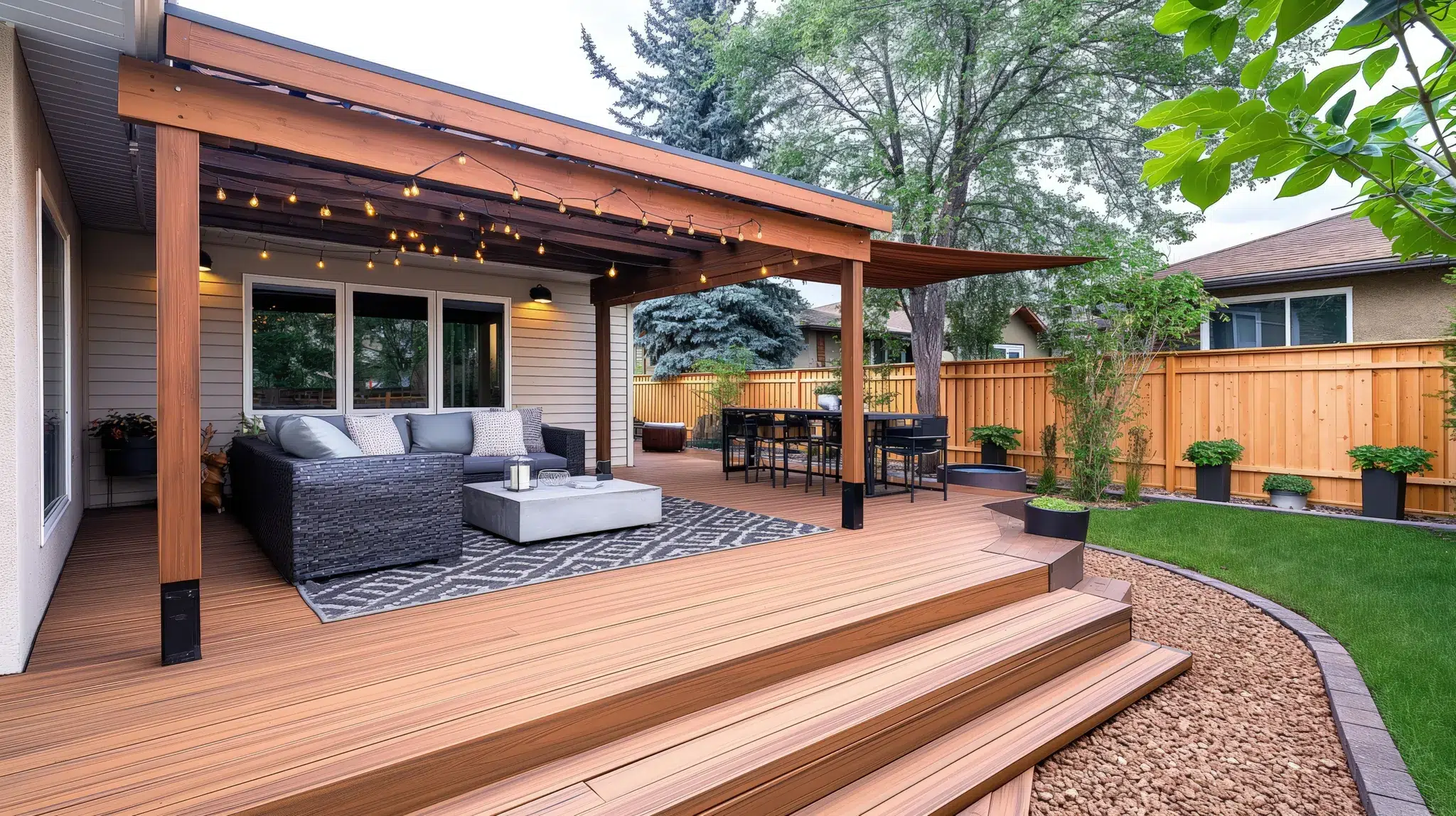
Refreshing your patio for summer means deep cleaning, checking for safety issues, and making smart upgrades so the space is more comfortable when it’s time to relax and entertain.
If your patio spent the last few months collecting leaves, grime, and general neglect, a targeted refresh before the warm weather hits will save you from scrambling once you actually want to use the space.
This blog will show you exactly what to tackle first, from quick wins like power washing to serious concerns like rotted deck boards.
Deep Cleaning and Surface Restoration
Deep cleaning your patio removes the grime that built up during winter from concrete, brick, stone, wood, furniture, windows, and siding, so you’re not scrambling when summer starts. It’s also a great time to see what might need repairs.
Homes in the Southeast deal with plenty of outdoor buildup from pollen, mildew, tree sap, algae, mold, and dirt.
This can hide problems like:
- Cracked pavers
- Rotting wood
- Loose railings
- Rusty hardware
- Drainage issues
- Damaged siding
Our outdoor maintenance service data shows that roughly 15% of our cleaning appointments uncover structural or electrical issues needing repair.
One of our home maintenance technicians explains:
“Once the grime comes off, you can see what’s really going on. Cleaning before summer gives you time to fix any problems before people are walking around out there.”
Power Wash Each Surface the Right Way
Power washing can make a patio look dramatically better, but how you handle each surface matters.
Concrete and brick can usually handle strong pressure, but surfaces like wood need a gentle approach so they don’t get damaged.
Start by clearing furniture, rugs, planters, and décor. Then clean from top to bottom so dirty runoff doesn’t streak across surfaces you already cleaned.
- Test a small hidden area first.
- Hold the nozzle 12-18 inches from the surface.
- Use steady, overlapping strokes.
- Rinse each section before the cleaner dries.
Diluted bleach can help with mildew on hard surfaces, but don’t use harsh chemicals on plants, painted finishes, or delicate materials.
For outdoor furniture, dish soap and a soft brush usually do the job.
Homeowners call us for pressure washing once per year. We can also inspect for soft spots in decking, corroded hardware, or electrical boxes that aren’t weatherproof anymore.
Our handyman, electrical, and plumbing teams can coordinate those repairs, so you don’t waste weeks of your summer tracking down separate contractors.
Deck Safety Inspection Checklist
A deck safety inspection helps you find loose boards, rusted fasteners, wood rot, weak railings, and support issues before your patio becomes the place where someone takes an unplanned tumble.
Start with a slow walkaround.
Press on railings. Step firmly across each board and look for any that shift, bounce, or feel soft under your feet.
Pay close attention to the spots most likely to weaken first:
- The base of the posts
- Stairs
- The boards closest to the house
- The area where the deck is bolted into your home
Check for:
- Loose or shifting deck boards
- Wobbly railings
- Rusted screws, nails, or brackets
- Cracked support posts
- Soft wood near ground contact
- Moisture, mold, or damage
Harsh winter storms are common across the Southeast, and can weaken outdoor structures even when the damage isn’t obvious from above.
If anything moves more than it should, a professional deck safety inspection is worth it, especially when you’re dealing with structural safety.
Our licensed and insured technicians can inspect damaged areas, replace weakened boards, reinforce hardware, and help you feel confident that your deck is ready for the first backyard gathering of the season.
Professional Outdoor Lighting
Outdoor lighting makes your patio safer and more usable by illuminating walkways, stairs, and gathering spaces where people naturally move in the evening. Lighting should help people see where they’re walking and make the space feel inviting.
Permanent outdoor lighting is a better fit when you’re tired of string lights that sag, solar stakes that fade, or temporary setups that stop working halfway through the season.
Best Places to Add Outdoor Lighting
- Walkways
- Stairs
- Entry points
- Seating areas
- Outdoor kitchens or grill zones
Warm pathway lights, step lights, overhead fixtures, and smart landscape lighting can create a more polished space and can also increase your home’s value.
Any hardwired outdoor lighting needs professional installation.
Outdoor electrical work requires proper circuit capacity, weather-rated equipment, and GFCI protection.
One of our electricians explains:
“You can’t treat a patio light like a hallway light. Outside, everything has to be rated, sealed, and protected from the weather.”
Our licensed electricians can handle those electrical details so your lighting upgrades are safe and code-compliant.
Outdoor Cooling and Airflow Solutions
Outdoor ceiling fans and misters are a great, functional way to refresh your patio by making the space feel cooler in the summer.
A ceiling fan keeps the air moving, and a misting system can drop the air temperature by 10-20°F, depending on humidity, shade, airflow, and the system itself.
In the Southeast, these simple upgrades make your outdoor spaces usable during July and August rather than sitting empty because the humid air feels suffocating.
If you’re planning a larger outdoor refresh, our backyard makeover ideas can help you think through lighting, cooling, plumbing, and comfort upgrades before summer arrives.
Electrical Requirements for Cooling Systems
Fans and misters both need dedicated electrical circuits with proper amperage, weather-rated components, and GFCI protection.
We’ve seen homeowner installations fail within months because connections weren’t weatherproof or circuits couldn’t handle the load.
Our electricians can size everything correctly and install it to code, so your cooling upgrades work even in the hottest weather.
Gas Fire Tables and Outdoor Kitchens
Gas fire tables, grills, and outdoor kitchens can make a patio feel more finished, but they need safe gas and electrical connections before they become part of your summer routine.
Low-profile fire tables have gotten popular because they create ambiance without requiring firewood or ash cleanup.
Outdoor cooking is trending in the same direction. Homeowners now use patios to expand the home’s usable square footage by adding outdoor kitchens. Built-in cabinets and permanent gas grills are a great way to upgrade your patio.
Precautions for Gas Grills, Fires, and Outdoor Kitchens
Before installing any gas feature, check your local fire codes. Some municipalities won’t allow open flames within certain distances of structures, fences, or property lines.
For gas features and outdoor kitchens, we can help with:
- Gas line extensions
- Shut-off valves
- Leak testing
- Outdoor outlets
- Lighting near cooking areas
- Plumbing for sinks or ice makers
This category of project gets dangerous when homeowners try to DIY.
Leaking gas connections can cause a fire, electrical circuits without proper amperage will trip constantly or overheat, and poorly installed plumbing can flood your home.
We can coordinate the gas, electrical, and plumbing work so everything functions correctly when it’s time for a cookout.
Patio Decor Trends to Consider
Summer patio decor trends have recently focused on warm, low-maintenance outdoor spaces that feel comfortable without requiring a full patio makeover every spring.
For Southeast homeowners, that means choosing:
- Outdoor fabrics made with marine-grade polyester that resist fading
- Polypropylene rugs that dry within hours after rain instead of staying wet for days
- Planters at least 14-16 inches deep so roots have enough soil to stay hydrated
- Native plants suited for Southeast weather
If you’re adding more plants or irrigation, check your outdoor faucets first.
A slow leak can waste water, damage pavers, and create standing water that attracts mosquitoes.
Our licensed plumbers can inspect outdoor plumbing, fix leaks, and adjust sprinkler heads so your patio stays pretty without wasting water.
Pre-Summer Outdoor Living Space Maintenance
Pre-summer maintenance of your outdoor living space helps prevent plumbing, electrical, drainage, and gas problems from ruining the season.
Before summer, walk the patio and test the systems you’ll rely on most.
- Outdoor Faucets: Turn each one fully on and check for leaks, drips, or low water pressure.
- GFCI Outlets: Press “test” (the power should trip), then “reset” to restore power.
- Gas Grill Connections: Spray soapy water on connections and watch for bubbles showing leaks.
- Electrical Covers: Replace cracked outlet covers to prevent water from entering outlets.
- Drainage patterns: Make sure water is flowing away from your house and patio, not toward the foundation or into low spots.
- Irrigation: Run each sprinkler zone and check for broken pipes or missing sprinkler heads.
A Lee Company+ membership can help homeowners stay ahead of these issues with ongoing inspections and priority service, so small problems are less likely to become expensive surprises that ruin your summer.
We’ve also put together this Spring Home Maintenance Checklist Every Homeowner Needs, so no task gets missed.
When Professional Help Elevates Your Outdoor Space
Hire professionals when your patio refresh involves electrical installations, gas line extensions, structural deck repairs, or major plumbing work.
Power washing your patio or rearranging furniture is one thing, but wiring outdoor lighting or running a gas line to a fire pit requires licensed expertise.
We can handle the licensed electrical, plumbing, gas, and handyman work that makes those upgrades safer and easier to complete.
For patio refresh projects, homeowners often call us for:
- Landscape lighting installation
- Outdoor ceiling fan installation
- GFCI outlets for outdoor appliances
- Gas line extensions to grills, fire pits, and cooking areas
- Deck structural repairs (boards, railings, support posts, etc.)
- Plumbing for outdoor kitchens, faucets, and irrigation
- Handyman work, such as staining, painting, and carpentry fixes
With licensed and insured technicians, financing options, and a 4.8-star average from more than 14,000 reviews, we make it easier to handle the behind-the-scenes work that turns a tired patio into a summer-ready outdoor space.
Get Your Patio Ready for Summer
A patio that’s ready for summer is clean, safe, and comfortable to use. Clean off the dirt, make sure nothing is broken or loose, and check that the water and electricity are working. Then think about adding lights or fans to make the space nicer.
If you find bigger issues along the way, contact us for outdoor electrical, plumbing, handyman, or maintenance needs before summer gets into full swing.
Patio Refresh FAQs
How often should I pressure wash my patio?
Most patios should be pressure-washed at least once per year, but ideally, once before summer and once in the fall. Spring cleaning removes mildew, pollen, and winter grime before heavy use begins.
What are the signs my deck needs a professional inspection?
Your deck needs a professional inspection if you notice soft wood, wobbly railings, rusty hardware, cracked posts, or boards that move under weight. These are signs of structural issues that probably need more than a quick patch.
Can I install outdoor lighting myself?
No, hardwired outdoor lighting needs a licensed electrician. Outdoor electrical work requires weatherproof materials, GFCI outlets, correct wire burial, and connections that meet electrical code. Low-voltage systems seem simpler, but still need proper transformer sizing and waterproof connections to work reliably. Professional installation prevents injuries and equipment failure.
What should I check before using my patio for the summer?
Check outdoor faucets, GFCI outlets, gas connections, drainage, deck boards, railings, and lighting. These simple checks help prevent leaks, electrical hazards, and safety issues before summer gatherings begin.
Are native plants better for Southeast patios?
Native plants are often better for Southeast patios because they handle local weather conditions with less water and maintenance. They also support local bees, butterflies, hummingbirds, and other pollinators.