The use of AI in facilities management helps you spot failing equipment early, lower your energy bills, and give your team faster answers when something goes wrong. For facility managers and operations leaders, that means fewer surprise shutdowns, less wasted labor, and better control over operating costs.
Below, we’ll cover how facilities are using AI for maintenance, energy management, compliance, and team support in 2026, as well as how to start implementing it without overhauling your entire operation.
AI Changes Reactive Maintenance to Predictive Maintenance
AI shifts maintenance from reactive to predictive by detecting equipment issues before they lead to failures. Instead of waiting for something to break, your team gets early signals that something is changing.
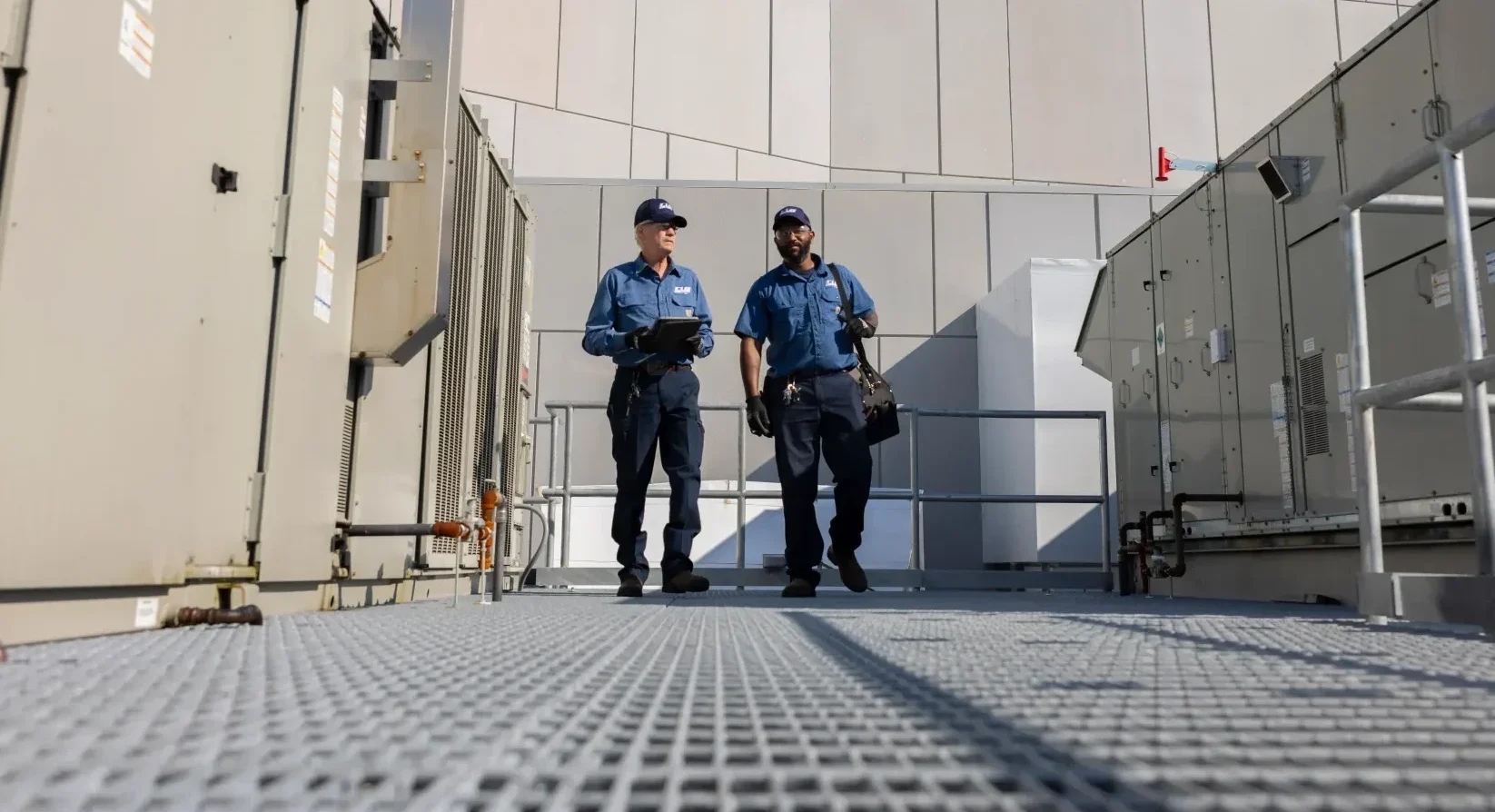
Technicians can’t manually check every motor, panel, and rooftop unit multiple times per day. AI handles continuous monitoring and sends alerts only when something needs attention.
Predictive maintenance isn’t new, but AI makes it practical at scale.
AI and predictive maintenance software for commercial buildings reduces emergency repairs, lowers maintenance costs, and keeps critical systems running when your business depends on them.
What AI Monitors in a Commercial Facility
- Motor performance to spot wear early before parts fail.
- Electrical load and heat to flag overload risks before they cause downtime.
- Airflow and pressure to keep Heating, Ventilation, and Air Conditioning (HVAC) systems efficient.
- Run-time trends to show which systems are working too hard, so you can step in early.
Readings often shift before equipment fully fails. A motor may start running hotter, a panel may draw more load than normal, or a rooftop unit may run longer to maintain the same temperature.
Catching those changes early keeps repairs more affordable and faster to resolve.
When a reading falls outside the normal range, your maintenance team gets an alert while there’s still time to schedule a repair.
Why This Matters Financially
Predictive maintenance directly impacts your bottom line. Research by Deloitte Analytics Institute shows:
- Organizations using predictive maintenance can reduce maintenance costs by up to 25%.
- Uptime improvements of 10-20% are common when failures are prevented instead of repaired.
For facilities teams, those gains show up as fewer after-hours calls, less downtime during business hours, and more time to plan repairs instead of reacting to them.
Our Smart Building solutions can integrate monitoring, automation, and analytics into your existing systems, so you can act on data rather than waiting for something to break.
AI Optimizes Energy Use in Real Time
AI lowers energy costs by adjusting your HVAC, lighting, and equipment loads in real time based on occupancy, weather, and demand patterns.
Instead of running systems on fixed schedules, smart building energy optimization responds to what’s actually happening throughout the day in your facility.
Energy is one of the largest controllable costs in a commercial building. AI gives you a way to manage it proactively instead of reviewing it after the fact.
Typical Energy Savings from Smart Building Optimization
| Optimization Area | Impact |
| HVAC optimization (AI/occupancy-based control) | ~15-35% energy savings |
| Lighting controls (daylight and occupancy sensors) | ~19-57% energy savings |
| Demand response/peak load management | Reduces peak demand and utility costs (varies by utility rate structure) |
| Retro-commissioning (system tuning and optimization) | ~6% median energy savings |
| Ventilation optimization (demand-controlled ventilation) | Reduces unnecessary airflow and energy use (varies by occupancy patterns) |
Sources: U.S. Department of Energy, Princeton University, Office of Technology Assessment, U.S. Green Building Council (USGBC), peer-reviewed HVAC optimization research. Actual savings vary based on building type, climate, and system configuration.
How AI Adjusts Energy Use Day to Day
In commercial buildings, AI adjusts:
- A/C and heating output based on which floors or zones are actually occupied, not just the time of day.
- Lighting intensity and duration in response to natural daylight levels and room usage.
- Equipment startup sequences to avoid demand spikes that trigger higher utility rates.
- Chiller and boiler operation based on actual cooling and heating loads.
- Ventilation rates to match current occupancy while maintaining air quality standards.
These changes happen continuously throughout the day, not just monthly when you review your bill or seasonally when someone manually updates the system schedule.
Why This Matters Financially
Reducing energy waste lowers operating costs today while improving your building’s long-term value.
Recent real estate analysis from JLL highlights that facilities are increasingly evaluated on efficiency per square foot, not just occupancy rates. That means how your building performs day to day directly impacts both your operating margin now and what the property is worth in the future. It can also make the space more competitive when it comes time to lease.
We can connect your HVAC, electrical, and control systems into one platform that monitors and optimizes performance.
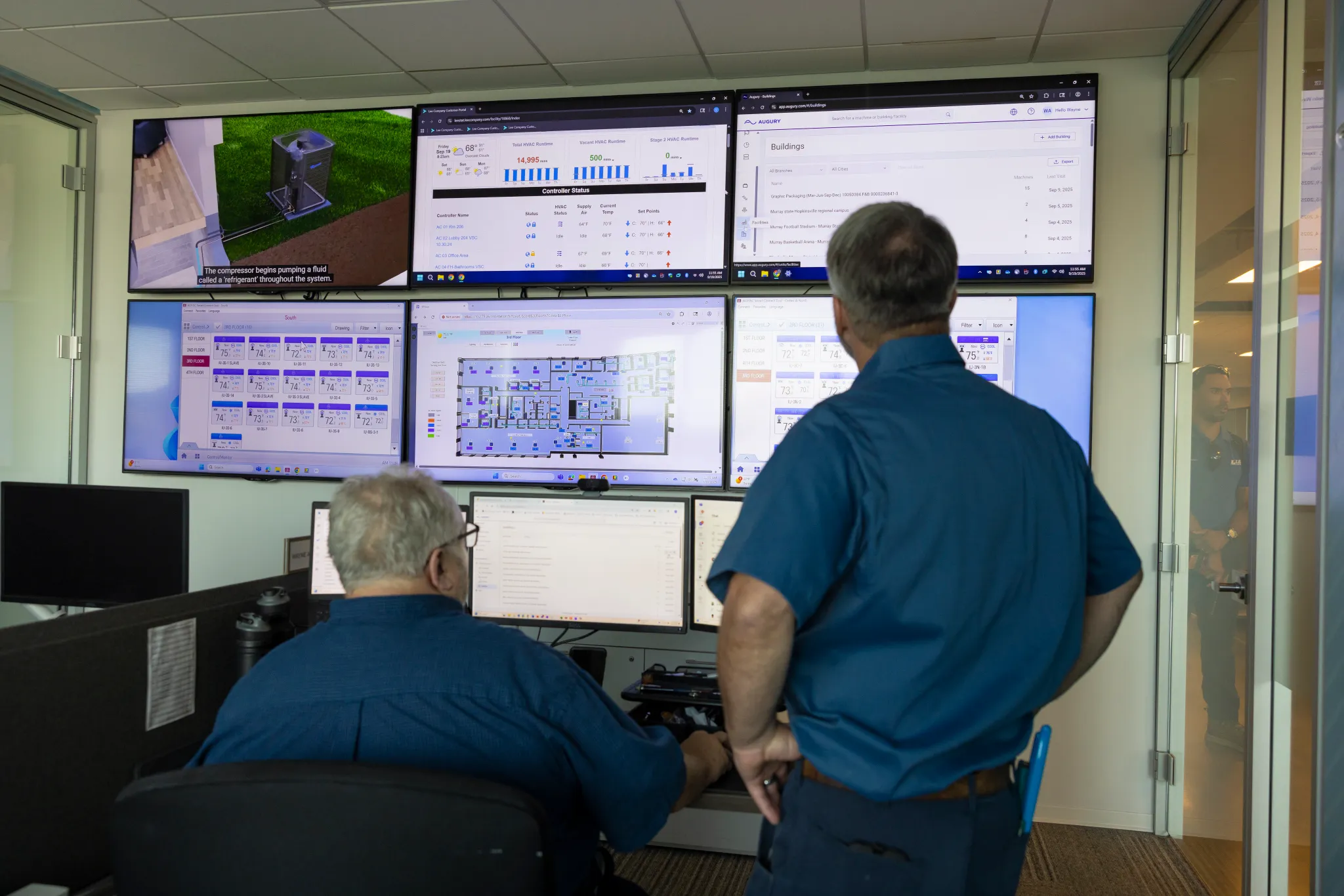
With Building Automation Systems (BAS) and custom dashboards, you can see where energy is going and make informed adjustments without constant manual input.
AI Supports Facility Teams by Bridging the Skills Gap
AI helps facility teams diagnose problems faster by giving both your in-house staff and outside service partners immediate access to the information they need when issues occur.
Your internal team handles day-to-day operations. External technicians step in for more complex repairs. AI connects both by giving them the same clear view of what’s happening inside your systems.
Instead of relying on memory or digging through manuals, they get direction tied to the specific equipment and issue.
How AI Supports Short-Staffed Teams
When a system alert triggers, AI tools can:
- Pull up the right section of equipment manuals in seconds.
- Generate work orders automatically with equipment details already filled in.
- Provide step-by-step repair procedures for the specific issue.
- Show past service history for the same equipment.
Many facilities are running lean. Experienced technicians are retiring, and newer team members are stepping in without the same hands-on background.
At the same time, your systems are more complex than ever. HVAC controls, building automation, and electrical systems now require faster decisions with less margin for error.
Why This Matters Financially
Faster diagnostics lead to faster repairs, which reduces labor time and overall service cost.
When your internal team can identify issues sooner, they can either fix them or escalate with clear information. That reduces time spent troubleshooting and avoids unnecessary service calls.
When outside technicians are needed, they arrive with context. That leads to fewer repeat visits, more first-time fixes, and less disruption to your operations.
We connect your building systems to real-time monitoring, so both your team and ours are working from the same data.
With alerts tied to actual equipment conditions and clear next steps, your facility can stay ahead of issues even with limited staff.
AI for Facility Compliance in Healthcare and Beyond
AI supports facility compliance by continuously monitoring conditions like pressure, temperature, and humidity, helping facilities stay within required standards.
Compliance depends on consistent system performance. Manual checks only show a brief snapshot of what’s happening, which can hide issues before audits.
What AI Monitors for Compliance
In healthcare and other highly regulated industries, AI for facility compliance tracks:
- Positive and negative pressure zones (operating rooms, isolation units, labs, etc.).
- Humidity levels in sterile processing, clean rooms, and storage areas.
- Ventilation rates required for infection control standards.
- Temperature ranges for medication storage and specimen handling.
These systems run continuously, so your team can respond to changes before they become violations.
Why This Matters Financially
Violations can shut down parts of your operation, delay certifications that affect patient admissions and billing, or lead to fines. Missing records during an audit creates problems that follow you to the next inspection.
Continuous monitoring helps you find and fix issues early while maintaining the documentation needed to support compliance.
Recent guidance from The Joint Commission reinforces the need for continuous, documented monitoring of environmental conditions, which is driving more facilities to adopt AI-supported tracking and reporting tools.
We design monitoring systems that track environmental conditions around the clock and connect directly to your building systems. This helps you maintain consistent performance without relying on manual entry.
How To Start Using AI Without the “Tech Headache”
You can start using AI in facilities management by adding monitoring to your highest-cost equipment first, then expanding based on results. You do not need to replace your entire system to see improvements.
Most facilities begin with a few key assets, connect them to a monitoring platform, and build from there.
AI at this stage is simply better visibility. Sensors track how equipment is running, and software flags changes that need attention.
This allows your team to act earlier without changing how your building operates day to day.
Start With High-Impact Systems
Start with equipment that drives your largest expenses and operational risks:
- Chillers and rooftop HVAC units
- Boilers and heating systems
- Electrical panels and distribution equipment
These assets deliver the fastest return when monitored because failures here lead to the highest repair costs and the most downtime.
Put Data First
Data quality matters before you scale. Sensors need proper calibration, readings must stay consistent, and alerts should reflect the actual failure risk.
If the data is unreliable, your team will start ignoring alerts.
Clean data leads to decisions your team can act on with confidence.
Plan a Phased Rollout of Building Automation Systems
Building Automation Systems (BAS) connect your equipment, sensors, and controls into one platform so you can monitor and adjust performance in real time.
A practical rollout usually follows these steps:
- Install sensors on critical equipment
- Connect data to a central monitoring platform
- Add analytics to identify abnormal patterns
- Expand monitoring to additional systems as needed
Each step builds on the previous one, so you can improve performance without disrupting daily operations.
We handle system integration, platform setup, and ongoing support so your team can stay focused on daily operations.
Our approach includes scalable integration, dashboards customized to your facility, and continued support as your monitoring expands.
You start where it makes the most financial sense and grow from there.
Why AI in Facilities Management Matters More in 2026
AI matters more in 2026 because rising costs, labor shortages, and increasing system complexity make manual facility management less effective and harder to sustain.
Facilities are expected to do more with fewer resources while maintaining performance and compliance. This shift is shaping the future of facility management technology, where buildings are managed through real-time data instead of manual checks and delayed reports.
One of our Smart Buildings team leads said:
“These teams are busy. They’re not usually ignoring problems. They just don’t have time to check everything. When the system points them to what actually needs attention, it takes a lot of pressure off.”
Maintenance trends show a growing shift toward predictive strategies and data-driven operations.
More than 50% of facilities are investing in AI-driven tools for predictive maintenance because the reactive approach creates higher long-term costs.
We can give your team the visibility and support to make informed decisions, reduce risk, and keep operations running without surprises.
Why We’re the Right Partner for Smart Building AI
AI delivers results when it’s connected to real systems and supported by teams who understand how buildings operate. Technology alone does not improve performance. Implementation and integration determine whether it works.
We connect automation, monitoring, and analytics directly to your mechanical and electrical systems. That gives you real-time insight into daily and long-term performance.
Facilities that treat their data as a working asset operate more efficiently and respond faster when something changes.
If you’re not sure where to start, we can help you identify the highest-impact opportunities and build a plan around them.
AI in Facilities Management FAQ
What is AI in facilities management?
AI in facilities management uses data and automation to improve maintenance, energy use, and system performance. It helps teams make faster, more accurate decisions using real-time insights.
Is predictive maintenance worth the investment?
Yes. Predictive maintenance reduces repair costs and prevents downtime by identifying issues before they lead to failure, which lowers overall operational risk.
Can AI reduce energy costs in commercial buildings?
Yes. AI reduces energy costs by adjusting systems in real time based on occupancy, demand, and environmental conditions, which minimizes wasted energy.
Do you need to upgrade your entire building to use AI?
No. Most facilities can start with targeted monitoring on critical systems and expand over time as data and results justify additional investment.