A toilet that takes forever to refill is typically caused by:
- A restriction in the water supply system
- Worn or clogged internal toilet components
- Whole-home water pressure problems
A toilet that’s slow to refill can mean a five-minute fix or a sign that your plumbing needs professional attention.
We’ll show you how to diagnose the issue, tackle simple repairs, and recognize when it’s time to call a plumber.
Partially Closed Supply Valve
A partially closed supply valve limits how much water can enter the toilet tank. The supply valve is the small oval knob behind or beside the toilet, usually near the wall or floor.
It may have been bumped or left partially closed after cleaning, flooring work, or a previous repair. When that happens, the toilet itself may work fine, but the restricted flow slows the refill.
How to Check and Fix the Supply Valve
- Locate the valve behind the toilet, typically on the left side near the wall.
- Turn it counterclockwise until it stops (fully open position).
- Flush the toilet and time how long the tank takes to refill.
- If the tank refills in about a minute or two, the valve was likely the issue.
If the valve won’t turn or starts dripping when you touch it, stop.
A corroded valve can break or leak. Our licensed plumbers can replace a failing shutoff valve before it becomes a leak behind your toilet.
Sediment or Debris in the Fill Valve
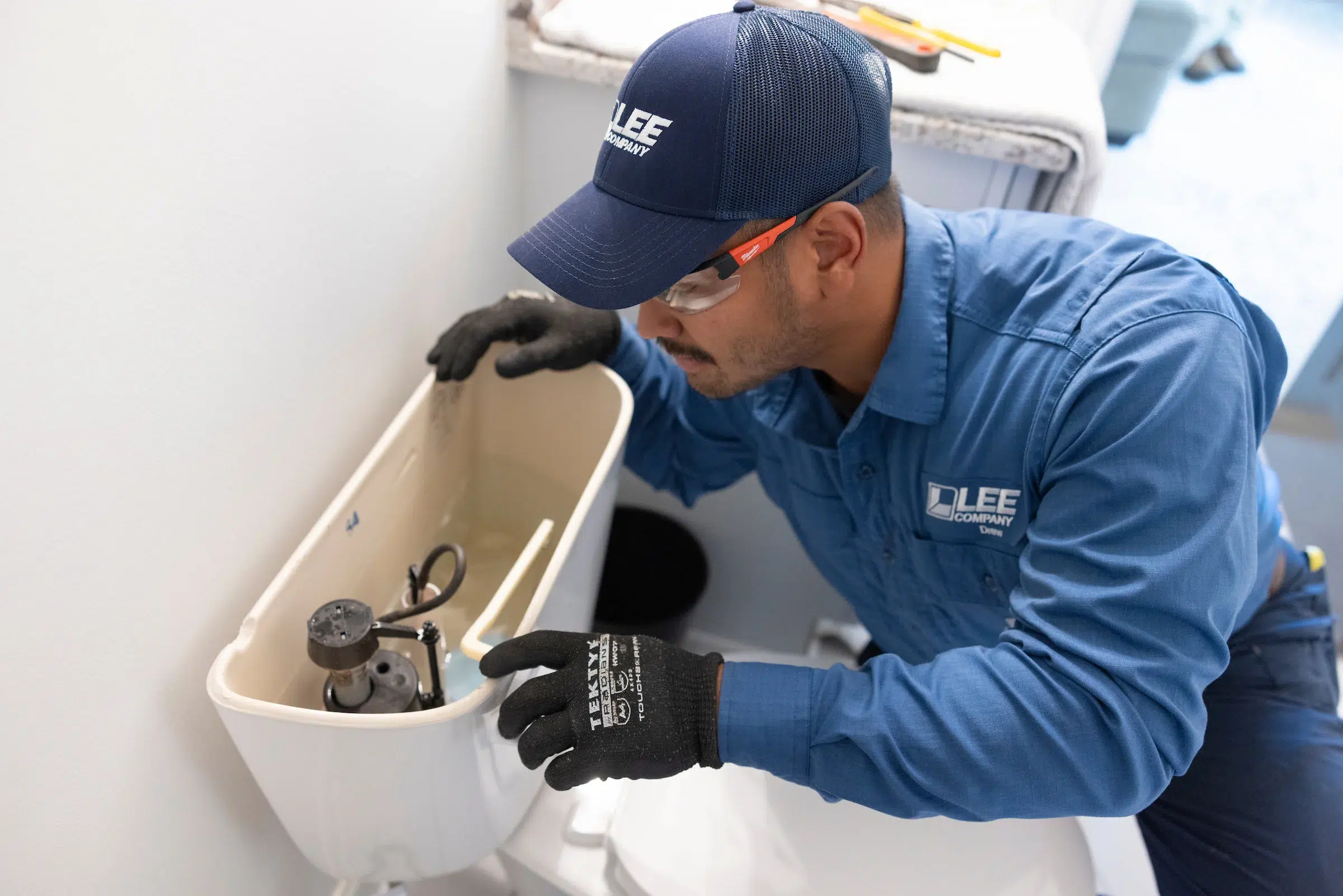
Sediment, grit, or mineral buildup inside the fill valve restricts water flow into the tank, causing the toilet to fill slowly. The fill valve controls water entering the tank after a flush, so any blockage inside that part can slow the refill.
This is common in homes throughout the Southeast, where water can contain dissolved minerals like calcium and magnesium that leave behind limescale in faucets, showerheads, and toilet parts.
Since the fill valve has small openings, a little lime scale or grit can slow the refill. Before replacing the part, try flushing debris out of the valve.
How to Flush a Fill Valve
- Turn off the supply valve behind the toilet.
- Remove the tank lid.
- Flush to lower the water level in the tank.
- Remove the fill valve cap by turning it counterclockwise (if your model allows).
- Place a plastic cup upside down over the exposed valve opening.
- Briefly turn the water back on for 5-10 seconds to flush debris into the cup.
- Turn off the water, remove the cup, and check for sediment.
- Repeat until the water runs clear.
- Reassemble the cap and turn the supply valve back on.
- Test the refill time.
Safety note: Don’t force old plastic parts. If they crack, you may create a leak. If the cap will not turn easily or the plastic looks brittle, stop.
Our plumbers can clean, inspect, or replace the fill valve if flushing doesn’t restore normal water flow. We’ll also check for other mineral buildup that could cause future problems with your toilet.
If mineral buildup shows up in one fixture, it’s worth checking the others too. You can prevent common plumbing problems by making fixture checks part of your regular home maintenance, rather than waiting for something to clog, leak, or run.
A Worn-Out or Malfunctioning Fill Valve
When a fill valve wears out, it stops regulating water flow properly, slowing how quickly your tank refills. The constant cycles of filling and shutting off, combined with minerals in the water, wear out the internal parts. Rubber seals get stiff and lose their flexibility, springs lose tension, and plastic pieces eventually crack.
You’ll know the fill valve needs replacing when:
- You hear humming or whistling while the tank refills.
- The water stream looks weak.
- The toilet keeps running after it should’ve stopped.
- The water level ends up different each time.
One of our licensed plumbers had this to say about worn-out fill valves:
“Once you take the valve apart, you’ll see the rubber’s gone hard as a hockey puck. No amount of adjusting is going to fix that. Once those internal seals go bad, you’re just wasting time trying to tweak things that have to be replaced.”
Replacing a fill valve doesn’t cost much. You can find them for $10-$20 at any hardware store.
How to Replace a Fill Valve
- Turn off the water supply valve behind the toilet.
- Flush the toilet to drain the tank.
- Disconnect the supply line from the bottom of the tank.
- Unscrew the locknut under the tank that holds the fill valve in place.
- Pull the old fill valve straight up and out of the tank.
- Insert the new fill valve and adjust it to the correct height per the instructions.
- Tighten the locknut underneath by hand, then give it a quarter turn with pliers.
- Reconnect the supply line.
- Turn the water back on slowly.
- Let the tank fill and check for leaks around the base of the valve.
If you’re comfortable with basic plumbing work, replacing a fill valve is fairly straightforward. If any connection looks corroded, brittle, or stuck, stop before forcing it.
Forcing old, corroded connections can crack the porcelain. A cracked tank turns a $20 part replacement into a $200+ toilet replacement, plus potential water damage to your flooring.
Call a plumber if the shutoff valve starts leaking when you turn it, if the supply line has visible corrosion or cracks, or if the bolts holding the tank look rusty and fragile.
If you’re having any trouble, we can swap out the fill valve, inspect the flapper and flush valve while we’re in there, and make sure everything’s refilling properly without creating any new problems.
A Leaky Flapper
A leaky flapper can make your toilet take longer to fill because water keeps dripping from the tank into the bowl after each flush.
Inside the tank, the flapper is the rubber part that covers the drain opening. It lifts when you flush, then drops back down to seal the tank as it refills.
When that seal is worn, warped, or blocked by mineral buildup, water slowly leaks into the bowl. The toilet keeps trying to replace the lost water, so the tank may refill repeatedly instead of shutting off normally.
A bad flapper can waste a surprising amount of water. For example, the City of Savannah reports that a toilet running nonstop can waste up to 200 gallons of water in a single day, potentially doubling a household’s water use and bill.
How to Tell If the Flapper Is Leaking
A dye test is the easiest way to check for a flapper leak:
- Drop food coloring into the tank (around 10 drops).
- Do not flush for 10-15 minutes.
- Check the bowl.
- If the color reaches the bowl, water is leaking past the flapper.
If the test shows a leak, replace the flapper with one that matches your toilet model.
If the toilet still runs after replacement, we can check the flush valve seat, fill valve, and other tank parts during a service visit.
Clogged or Corroded Supply Lines
A clogged, kinked, or corroded supply line can make your toilet fill slowly because the tank isn’t getting water fast enough. This is the small line that runs from the shutoff valve on the wall to the bottom of the toilet tank.
If that line is bent, blocked, or narrow inside, water has to squeeze through it instead of flowing freely.
Braided hoses can kink when the toilet is pushed too close to the wall, and older metal or accordion-style lines can build up corrosion or calcium scale over time.
A restricted supply line might mimic a fill valve problem. So you replace the fill valve, but the refill stays slow because water cannot reach the valve fast enough.
One of our plumbers said this:
“We see a lot of old accordion-style flex lines in older homes. The outside may look fine, but inside, they’re caked with mineral deposits. Sometimes we disconnect one, and barely any water comes through. A stainless steel braided line usually fixes it.”
Toilet supply lines that are brittle, rusted, kinked, cracked, bulging, or showing white mineral deposits around the connection nuts should be replaced.
Most supply lines should be replaced every 10 years as part of preventative home maintenance.
If the line is newer and the connections are clean, a handy homeowner may be able to replace it with a properly sized braided stainless steel line.
Safety note: Aging supply lines can burst under pressure. If anything looks old or at risk of breaking, stop.
Schedule a plumbing inspection, and we’ll replace the supply line, inspect the shutoff valve, and check the fill valve, all in one visit. Our plumbers carry the right parts and know when a connection is about to fail before it does.
Low Water Pressure
When water pressure is low throughout your home, toilets refill slowly, along with everything else. The key is figuring out if it’s isolated to one bathroom or if it’s happening everywhere.
- If it’s just one toilet: The problem is probably the fill valve, supply valve, or supply line for that specific fixture.
- If it’s multiple fixtures: You’re likely dealing with a pressure-reducing valve issue, a restriction in the main line, or a problem with your municipal water supply.
How to Test for Whole-Home Water Pressure Issues
- Turn on the bathroom sink near the slow toilet and observe the flow.
- Check a bathroom sink in another part of the house.
- Run the kitchen faucet.
- Ask yourself: Is everything slow, or just this toilet?
If every fixture feels weak, the pressure-reducing valve may be part of the problem.
City water can enter a home at 80-120 PSI, while normal residential water pressure should be around 45-60 PSI. The PRV helps bring that pressure into a safer range.
When the PRV fails or shifts out of range, your home may end up with pressure that’s too low or too high. Low pressure can slow every fixture in the house. High pressure can stress pipes, water heaters, and appliances.
We can run a pressure test, inspect your PRV, and tell you whether this is a one-toilet fix or if your whole plumbing system has an issue.
When to Call a Plumber for Toilet Repairs
Call a plumber if the toilet keeps slowly filling despite your attempts to fix it, if you spot leaks, or if the whole house seems to have weak water pressure. A plumber can check everything from the tank components to the main supply line and pressure system in one visit.
Records from our service calls show people typically wait 12-18 months between plumbing visits. That window gives minor issues room to develop unnoticed.
Our licensed technicians can inspect your toilet and handle code-compliant repairs with a focus on water efficiency. A Lee Company+ membership includes scheduled inspections and priority booking to stop small problems before they grow. Schedule a service visit, and we’ll figure out why your toilet’s taking so long to refill.
Slow Filling Toilet Tank FAQs
Why does my toilet take so long to fill up?
A toilet usually fills slowly because water is restricted, the fill valve or flapper is worn, or your home has low water pressure. Start with the supply valve, then check the fill valve, flapper, and supply line.
How long should a toilet take to refill?
A toilet should usually refill in about one to two minutes. If it takes much longer, something is slowing the water flow or causing the tank to keep refilling.
Can I fix a slow-filling toilet myself?
You can try simple fixes like opening the supply valve, flushing the fill valve, or replacing the flapper. Call a plumber if anything leaks, looks corroded, or still fills slowly after basic repairs.