Regular commercial HVAC maintenance reduces operating costs and keeps your equipment running longer. Without maintenance, you’re essentially running your system inefficiently until it fails prematurely.
Below, we’ll share the benefits of maintenance, the 2026 regulatory changes affecting your equipment, and a commercial HVAC maintenance checklist to protect your investment and keep business operating as usual.
The Benefits of Regular Commercial HVAC Maintenance
Regular commercial HVAC maintenance cuts energy costs by 5-20%, extends equipment life from 10-12 years to 15-20+ years, and prevents emergency breakdowns that can shut down your business.
When systems are inspected and serviced on a consistent schedule, they run closer to their intended efficiency and are less likely to fail during peak demand.
For facility managers, that translates into:
- Fewer emergency calls
- More predictable budgeting
- Better performance across the entire building
Maintenance also means issues can be found while they are still manageable, before they interrupt operations or force a rushed capital decision. Our Facility Maintenance plans are built around that goal.
We handle commercial HVAC tune-ups, repairs, and planned service with the added option of recurring maintenance planning, reporting, and on-site facility support for teams that need more visibility and coordination.
The sections below walk through each benefit and what it means for your operating costs.
Energy Efficiency and Cost Savings
One of the clearest reasons to maintain commercial HVAC systems is to control energy costs.
Proper HVAC maintenance can save 5-20% on annual energy costs, depending on the system and building type.
When systems are not maintained, efficiency can drop by 10-40% as components work harder to deliver the same output.
That shows up as:
- Increased energy use
- Longer runtime
- Added strain on motors, compressors, belts, and controls
Since energy costs are typically the highest operating expense for most commercial facilities, they add up quickly.
We address these issues through tune-ups, performance checks, and smart building solutions that monitor energy use and system performance.
When a building needs more support, we provide energy optimization, test and balance services, and real-time dashboards that make efficiency problems easier to spot.
Enhanced System Performance and Longevity
Regularly maintained systems operate more efficiently and are less likely to experience unexpected breakdowns. Commercial HVAC equipment typically lasts 15 to 20 years, depending on the system and how it is maintained.
Component condition plays a major role in that lifespan.
Some parts, such as heat exchangers or structural components, can last as long as 35 years. Others, including compressors, may need to be replaced multiple times during the system’s life.
Access to universal replacement parts also affects how long a system can stay in service.
Consistent service by a professional keeps your commercial A/C or furnace operating beyond standard expectations and helps avoid premature wear.
This directly impacts capital planning.
Extending equipment life by even just a few years can delay major replacement costs, which often reach tens or hundreds of thousands of dollars.
In larger facilities with multiple systems, that added time allows for phased upgrades in your capital planning.
Our teams support that process by evaluating system condition, identifying repair or upgrade needs, and helping plan improvements based on how the building operates day to day.
Improved Indoor Air Quality for Businesses
Good indoor air quality depends on the quality and consistency of your HVAC maintenance. The air inside commercial buildings is circulated multiple times per hour, so neglected filters, blocked vents, and dirty coils affect everyone inside daily.
EPA data shows that Americans spend about 90% of their time indoors, where air can be 2 to 5 times more polluted than outdoor air. Studies have also connected poor indoor air quality to lower productivity and cognitive function.
Indoor air quality problems often show up as:
- Recurring complaints about the air feeling stale or stuffy
- Unexplained increases in sick leave usage
- Occupant reports of headaches during the workday
- Lower productivity and cognitive performance
Even if your building is brand new or recently remodeled, you’re not entirely safe from the dangers of poor indoor air quality.
Up to 30% of newly built commercial structures experience high levels of occupant complaints related to health and comfort, all stemming from indoor air quality.
If you’ve been dealing with increased employee sick days, the source may be your HVAC system.
We’ve seen how much indoor air quality matters in our work:
In our Southern Adventist University case study, outdated room units and limited outside air created a poor indoor air quality situation across two residence halls.
We added dedicated outside air systems to deliver filtered, conditioned fresh air throughout the buildings.
With continued maintenance, that investment will support better performance for years while creating a healthier environment for students and staff.
Regulatory Compliance
Commercial HVAC regulations in 2026 require building owners to meet updated efficiency standards by transitioning to newer refrigerants with lower environmental impact.
Systems that don’t meet SEER2 and EER2 requirements (or still rely on phased-out refrigerants) can create compliance issues during replacement or retrofit projects.
Regular maintenance keeps systems operating within design parameters and gives you time to plan upgrades before failure forces a rushed decision.
Compliance planning becomes especially relevant during:
- RTU replacements
- Chiller performance reviews
- Remodel or expansion projects
- Equipment nearing the end of its life
- Building ownership changes or lease transitions
- Energy audits or benchmarking requirements
We can support you in this planning with maintenance documentation, compliance guidance, startup and performance verification, and project coordination.
For facilities upgrading controls, our Smart Building services also support retrofits, Building Automation System (BAS) integration, and ongoing performance tracking.
Reduced Repair Costs
Proactive commercial HVAC maintenance reduces repair costs by giving technicians more opportunities to catch worn parts, dirty components, loose wiring, and performance issues before they fail.
A worn-out capacitor, slipping belt, blocked drain line, or airflow issue is usually less expensive to address during routine service than during an after-hours emergency visit.
Skipping maintenance eventually creates expensive emergency repairs.
Emergency service is available 24/7 from our licensed HVAC technicians when needed, but the goal should be prevention.
Regular tune-ups give buildings a better chance of handling problems during normal hours rather than during shutdowns or in response to complaints.
Increased Comfort
Regular HVAC maintenance keeps temperatures stable, airflow consistent, and humidity under control throughout your building.
When you skip maintenance, you’ll experience:
- Temperature swings between different zones or floors
- Noisy equipment that disrupts workspaces
- Humidity levels that feel too dry in winter or too sticky in summer
- Weak airflow in certain rooms, while others get too much
Comfort complaints affect more than just employee morale and your Yelp score.
Uneven temperatures reduce productivity in offices. Humidity problems can damage inventory in retail. Loud equipment drives customers away in hospitality settings.
Our Facility Maintenance plans address these problems by keeping airflow balanced, zone controls working properly, and equipment running quietly.
We can also coordinate HVAC service with plumbing, electrical, and full-service Facility Management, so building conditions get handled as a complete system.
Overview of Commercial HVAC Systems
Commercial HVAC systems are large-scale heating, ventilation, and air conditioning systems designed to regulate temperature, airflow, and air quality across larger, more complex spaces than residential systems.
These systems include:
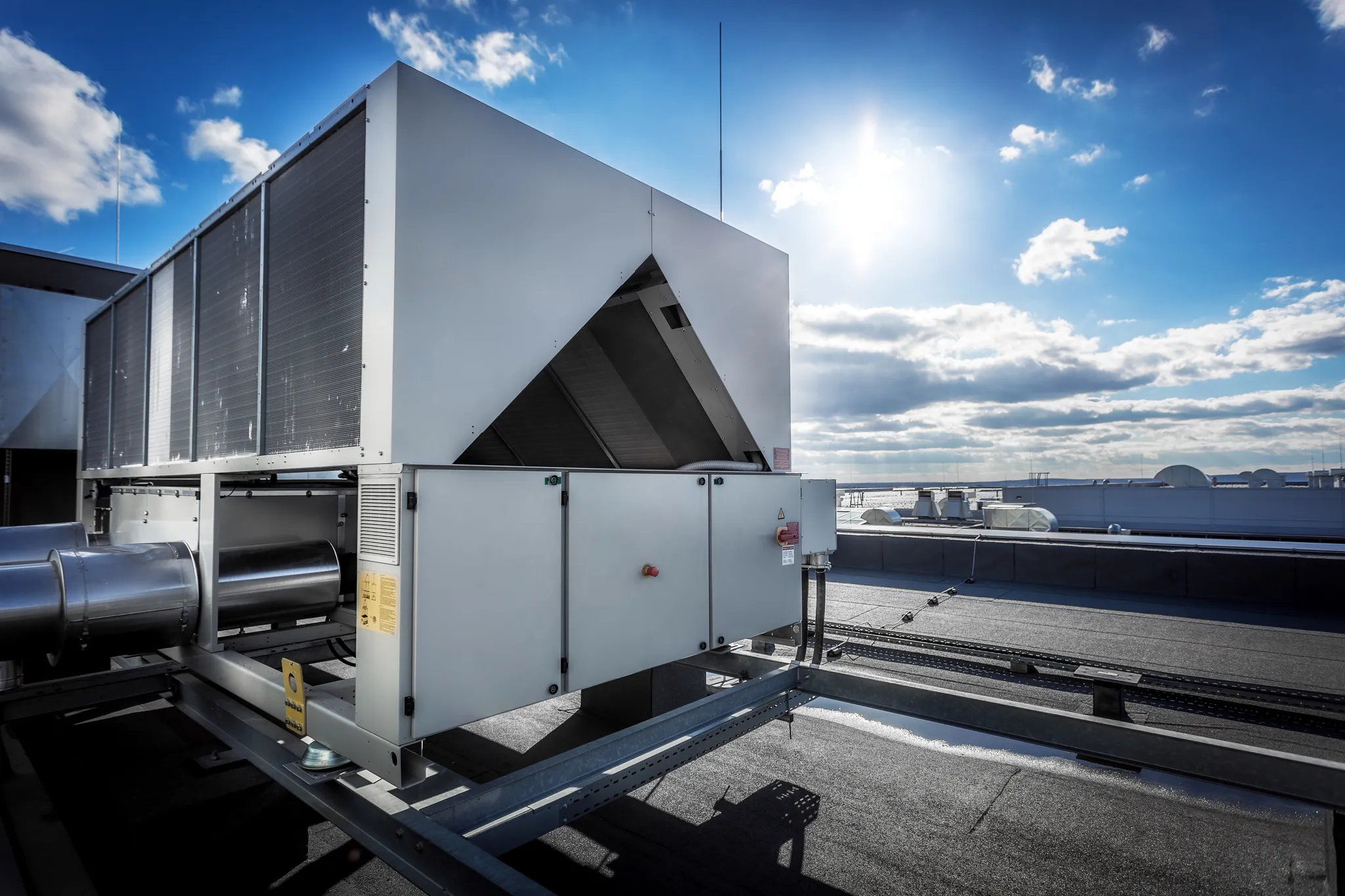
- Rooftop units (RTUs)
- Chillers
- Boilers
- Ductwork
- Control systems
- Zone-based components
Each component must work together at all times to maintain consistent indoor conditions.
That complexity is what makes maintenance so important. Unlike simpler residential heating and cooling, commercial equipment often runs longer hours, serves multiple zones, and supports building operations that can’t tolerate comfort swings or extended downtime.
The right maintenance approach depends on the:
- Size of your property
- Layout of the building
- Type of work happening inside it
- Demands of the people using the space every day
We support these systems with commercial HVAC repairs, upgrades, and planned maintenance tailored to how each building actually operates.
Here’s a quick overview of commercial HVAC systems, so you understand what kind of maintenance they may need:
Common Commercial HVAC System Types
Single-split systems
Single-split systems use one indoor unit and one outdoor unit connected by refrigerant piping. These systems are often used in small offices, retail suites, and other light commercial spaces where rooms can be served individually. Routine filter changes and refrigerant checks help keep these systems operating reliably across each space.
Benefits
- Affordable
- Can be used for heating and cooling
- Ideal for buildings with multiple small rooms
- Allows individual room control
- Each system can operate independently
Drawbacks
- Requires substantial outdoor space when multiple units are needed.
Rooftop units (RTUs)
Rooftop units are self-contained HVAC systems mounted on the roof of a building. They house major heating and cooling components in one cabinet and are common in larger commercial properties.
Because they are constantly exposed to outdoor conditions, regular inspections and coil cleaning are important to maintain performance.
Benefits
- More energy efficient than many smaller split setups
- Low noise levels
- Modular design allows easier expansion or replacement of parts
- Allows central control of multiple units
- Lower operational costs when properly maintained
Drawbacks
- Higher installation and maintenance costs
Packaged units
Packaged units are also self-contained commercial systems, though they‘re often installed at ground level instead of on the roof.
They’re designed to combine major HVAC functions into one unit. Their consolidated design can simplify routine maintenance and service access.
Benefits
- Compact design supports easier installation
- Lower maintenance costs due to fewer separate components
- Can combine heating, cooling, and ventilation
- Can support large installations with multiple units
- Low noise levels
Drawbacks
- Higher upfront cost
VRF/VRV systems
Variable refrigerant flow and variable refrigerant volume systems connect multiple indoor units to one outdoor unit, allowing zone-by-zone temperature control.
These systems rely on precise refrigerant management and controls, which makes regular system calibration and monitoring important for consistent performance.
Benefits
- Supports personalized heating and cooling across multiple zones
- Strong fit for larger facilities
- Multi-zone operation
Drawbacks
- Higher installation costs
- Higher operational costs in some applications
Multi-split systems
Multi-split systems connect several indoor units to one outdoor unit. They reduce clutter from outdoor equipment and give operators more control over individual indoor spaces.
Ongoing maintenance contributes to more balanced airflow and consistent performance across each connected zone.
Benefits
- Can connect multiple indoor units to one outdoor unit
- Inverter technology allows individual settings for each zone
Drawbacks
- Higher installation costs
- Requires more pipework
Each system type here has different maintenance priorities. That’s one reason our commercial HVAC teams evaluate equipment based on how the building is actually used, not just the model number on the unit.
Potential Safety Risks Associated with Poor HVAC Maintenance
Poor HVAC maintenance can create safety risks tied to combustion, electrical systems, ventilation failures, and moisture control. These risks can affect occupant health, building liability, and business continuity.
Neglecting HVAC maintenance can lead to:
- Carbon Monoxide Poisoning: A lack of proper maintenance for gas furnaces and boilers can lead to unsafe levels of carbon monoxide. This colorless, odorless gas poses a significant health risk to building occupants, with 100,000+ people in the US visiting emergency rooms yearly due to accidental poisoning.
- Fire Hazards: Dust and debris buildup in HVAC systems can heighten fire risk, especially with electrical issues. In fact, heating systems account for up to 15% of commercial building fires in the US.
- Mold and Mildew Growth: Inadequate ventilation and humidity control can lead to mold and mildew growth in commercial spaces, contributing to poor indoor air quality and potential health issues.
- Smoke Exhaust Issues: An improperly maintained HVAC system may struggle to vent smoke and other hazardous materials properly, posing serious risks in commercial kitchens, industrial facilities, and spaces where smoke, gas, or other dangerous substances are generated.
These are also the kinds of issues we see surface after something has already gone wrong.
Scheduled inspections help reduce that risk.
We support this through routine safety inspections, commercial HVAC service, and coordinated facility maintenance that can also bring electrical, plumbing, and general repair issues into the same plan.
How Often Should Commercial HVAC Systems Be Maintained?
Commercial HVAC systems should be serviced at least twice per year, with additional inspections depending on:
- Usage
- Building size
- Equipment type
High-demand facilities may require quarterly or monthly check-ins to stay ahead of common commercial HVAC problems.
Regular service intervals allow technicians to track performance trends, identify gradual issues, and keep systems operating within expected ranges.
As a business owner or facility manager, you’re likely looking to keep costs low and minimize disruptions to your operations, and professional service helps with both.
What Happens If You Skip HVAC Maintenance?
Skipping HVAC maintenance increases the likelihood of system failures, higher energy use, shortened equipment lifespan, and disruptions to building operations.
Small issues like restricted airflow or loose electrical connections can grow into larger repair problems when they go unnoticed.
For facility teams, skipped maintenance often leads to:
- Reactive service calls
- Rushed budgeting decisions
- Employee, customer, or tenant complaints
- More downtime than expected
In some cases, it also means equipment reaches the point of replacement sooner than planned.
We’ve worked in facilities where long-deferred HVAC issues were already affecting critical operations.
In our Parkridge Medical Center case study, we were tasked with updating major parts of the hospital’s HVAC backbone that had gone untouched for more than 30 years, and our teams completed the work without interrupting neighboring clients.
That kind of result comes from having enough in-house labor, coordination, and trade coverage to manage both maintenance realities and larger recovery projects.
Commercial HVAC Preventative Maintenance Checklist
A commercial HVAC preventative maintenance checklist outlines the inspections, cleanings, and performance checks needed to keep systems operating efficiently and reliably.
Key Maintenance Tasks and Why They Matter
| Maintenance Task | Benefit |
| Filter replacement | Keeps air moving and prevents buildup inside the system. |
| Refrigerant check | Keeps cooling output where it should be. |
| Electrical inspection | Catches loose connections and worn components early. |
| Thermostat calibration | Keeps zones from drifting too hot or too cold. |
| Motor, belt, fan check | Prevents wear from turning into failure. |
| Ductwork inspection | Fixes airflow issues and energy loss. |
| Drain line clearing | Avoids backups and water damage. |
| Condensate system check | Keeps moisture moving out of the system. |
| Power supply check | Ensures safe, steady operation. |
| Safety inspection | Flags issues before they become hazards. |
When maintenance is performed consistently and aligns with seasonal demand, equipment runs more smoothly, uses less energy, and is less likely to fail during peak conditions.
This creates a predictable maintenance rhythm instead of reacting to breakdowns.
It also helps extend equipment life and maintain stable indoor conditions across the building.
How Maintenance Tasks Break Down Throughout the Year
Seasonal HVAC maintenance prepares systems for peak heating and cooling loads.
- Spring maintenance gets cooling equipment ready before summer heat arrives.
- Fall maintenance ensures heating systems work before winter cold sets in.
- Year-round tasks keep equipment running smoothly between seasonal checkups.
Spring (Pre-Cooling Prep)
- Clean condenser and evaporator coils.
- Check refrigerant charge levels.
- Clear condensate drain lines to prevent water damage.
- Test cooling capacity before temperatures climb.
Fall (Pre-Heating Prep)
- Inspect heat exchangers for cracks or damage.
- Test ignition systems and flame sensors.
- Verify gas pressure on furnaces.
- Check heat pump defrost cycles.
Year-Round Basics
- Replace or clean filters monthly (MERV 13+ recommended for better air quality).
- Lubricate motor bearings.
- Tighten electrical connections.
- Monitor system performance for changes.
Scheduling maintenance this way catches problems before extreme weather forces systems to work harder, which is when failures typically happen.
Protect Your HVAC System Before Problems Start
Maintaining a complex system can be challenging when you’re balancing multiple priorities. That’s why it’s important to understand both what should be done and when it should happen.
Working with a qualified team means nothing is missed and systems are maintained based on actual operating conditions.
If you’re managing multiple systems or planning for upcoming upgrades, our team can help you evaluate performance, identify risks, and build a maintenance strategy that fits your facility.
Schedule your commercial HVAC maintenance today and keep your facility operating with confidence.
Commercial HVAC Maintenance FAQs
What is included in commercial HVAC maintenance?
Commercial HVAC maintenance includes inspection, cleaning, testing, and adjustment of system components to ensure reliable performance. This typically covers air filter replacement, evaporator and condenser coil cleaning, tightening electrical connections, refrigerant level checks, thermostat calibration, belt and motor inspection, and drain line clearing.
How often should commercial HVAC systems be serviced?
Most commercial systems should be serviced at least twice per year: Once before cooling season (spring) and once before heating season (fall). Facilities with higher usage, such as restaurants, medical offices, or data centers, may require quarterly maintenance to prevent downtime.
What are signs a commercial HVAC system needs maintenance?
Common signs include inconsistent temperatures, higher energy bills without changes in usage, unusual grinding or squealing noises from units, and poor airflow. These issues often indicate clogged filters, refrigerant leaks, failing compressors, or ductwork problems.
Does maintenance really reduce HVAC costs?
Yes. Regular maintenance can reduce energy consumption by 5-20% and extend equipment life by several years. It also helps catch small issues early before they lead to major failures such as compressor damage or system shutdowns.